Reyes Magos in Spain: The Story, the Traditions, and What to Expect in Costa Adeje

For many visitors, Christmas in Spain doesn’t really end on December 25th.
It quietly stretches into the first days of January, building toward a moment that feels more intimate, more emotional, and far more rooted in tradition: the arrival of the Three Kings — Los Reyes Magos.
In Costa Adeje and across Tenerife, January 5th and 6th are not just dates on a calendar. They are days filled with anticipation, childhood excitement, and a slower rhythm that feels very different from the commercial Christmas most people are used to.
The Story of the Three Kings (Reyes Magos)
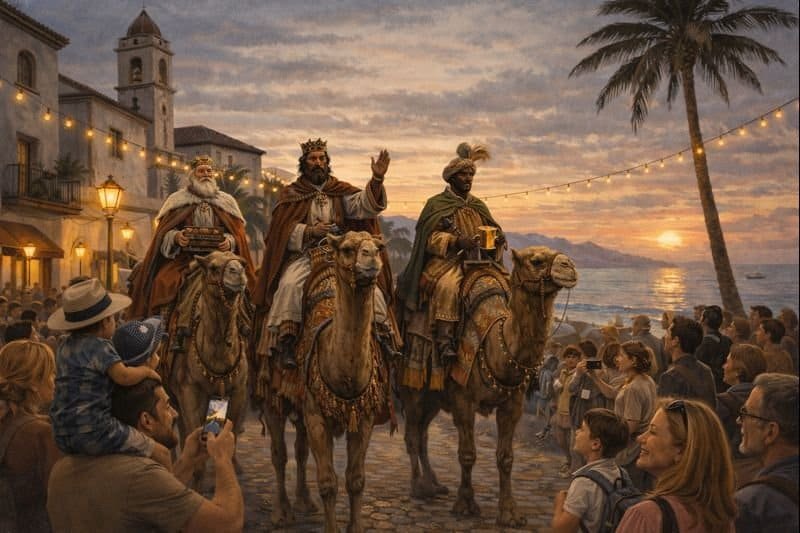
The story of the Three Kings comes from Christian tradition and the Gospel of Matthew. Melchior, Gaspar, and Balthazar are described as wise men who traveled from the East, guided by a star, to visit the newborn Jesus in Bethlehem.
What makes this story special is not just the journey, but the meaning behind the gifts they brought:
- Gold, offered to a king
- Frankincense, symbol of divinity
- Myrrh, associated with humanity and mortality
Over centuries, this biblical episode evolved into a living tradition in Spain. The Three Kings became figures of generosity, wonder, and hope — especially in the eyes of children, who believe they travel long distances every year to bring gifts to those who behaved well.
Unlike Santa Claus, Reyes Magos are not a modern import. They are deeply woven into Spanish history and identity, passed down from generation to generation.
Why Reyes Magos Matter More Than Christmas Day in Spain
In many Spanish households, January 6th (Día de Reyes) is more important than December 25th. Traditionally, this is the day when children wake up to find their presents, placed carefully around the home or near the shoes they left out the night before.
The days leading up to Reyes Magos are filled with a special kind of anticipation. Children write letters to the Kings, listing their wishes and promising good behavior. Parents and grandparents keep the magic alive, just as it has been done for decades.
Christmas Day is celebrated, of course — but Reyes Magos are the emotional heart of the season. They represent patience, imagination, and the joy of waiting for something meaningful rather than instant.
Cabalgata de Reyes – The Night of January 5th
On the evening of January 5th, towns and cities across Spain host the Cabalgata de Reyes, a festive parade that marks the arrival of the Three Kings.
This is not a small event. Streets fill with families, children clutch bags ready to catch sweets, and music echoes through town centers. The Kings appear on decorated floats, accompanied by performers, dancers, and local groups.
In Costa Adeje, the Cabalgata is a joyful community celebration rather than a large-scale spectacle. It feels local and warm, with neighbors greeting each other and children watching wide-eyed as candies are thrown into the crowd.
For visitors, this evening offers a rare glimpse into everyday Canarian life — one that isn’t staged for tourists, but lived naturally by the community.
What Happens on January 6th (Día de Reyes)
January 6th is a national public holiday in Spain, and the atmosphere changes noticeably. Mornings are quiet, streets are calmer, and families gather at home.
This is a day for:
- opening presents
- long, relaxed family meals
- spending time together without rush
Many shops remain closed, and some restaurants operate with reduced hours. The pace of life slows down, reminding visitors that this is a family-centered celebration, not a shopping day.
A central tradition of the day is eating Roscón de Reyes, a round, sweet cake decorated with colorful candied fruit meant to resemble a crown. Inside the cake are two surprises:
- a small figurine, which brings good luck
- a hidden bean — whoever finds it traditionally pays for the cake next year
Reyes Magos in Costa Adeje: What Visitors Should Know
If you’re spending these days in Costa Adeje, it’s worth planning ahead. Grocery shopping should be done before January 6th, and restaurant reservations are recommended if you plan to dine out.
Beaches, promenades, and outdoor spaces remain accessible and pleasant, making it a lovely time for walks and quiet moments by the ocean. The holiday atmosphere is present, but gentle — not overwhelming.
Rather than big fireworks or loud parties, Reyes Magos in Costa Adeje offer something subtler: a sense of belonging and tradition, even if you’re just passing through.
Why Reyes Magos Are a Beautiful Experience for Visitors
What makes Reyes Magos special isn’t extravagance. It’s the simplicity of the ritual:
- children waiting for the Kings
- families sharing a cake
- towns coming together without spectacle
For many travelers, witnessing Reyes Magos for the first time feels unexpectedly moving. There’s something touching about seeing a tradition that hasn’t been rushed, modernized, or turned into a product.
In Costa Adeje, with the ocean nearby and mild January temperatures, the celebration feels both grounded and serene — a quiet reminder that some traditions are meant to be felt, not consumed.