Culture, Carnival & History of Adeje: The Ultimate Guide to the Town’s Soul

Adeje isn’t just sunshine and luxury resorts — it’s a town with a heartbeat. Beneath its polished promenades lies a story centuries deep: of farmers and festivals, of faith and humor, of survival and celebration.
From ancient legends whispered in volcanic ravines to modern-day Carnivals bursting with color, Adeje’s culture tells the story of a place that has always known how to adapt without losing its soul.
This is your complete guide to the culture, carnival, and history of Adeje — not just the what and where, but the whybehind the town’s unmistakable charm.
The Spirit of Adeje: Between Mountains and Sea
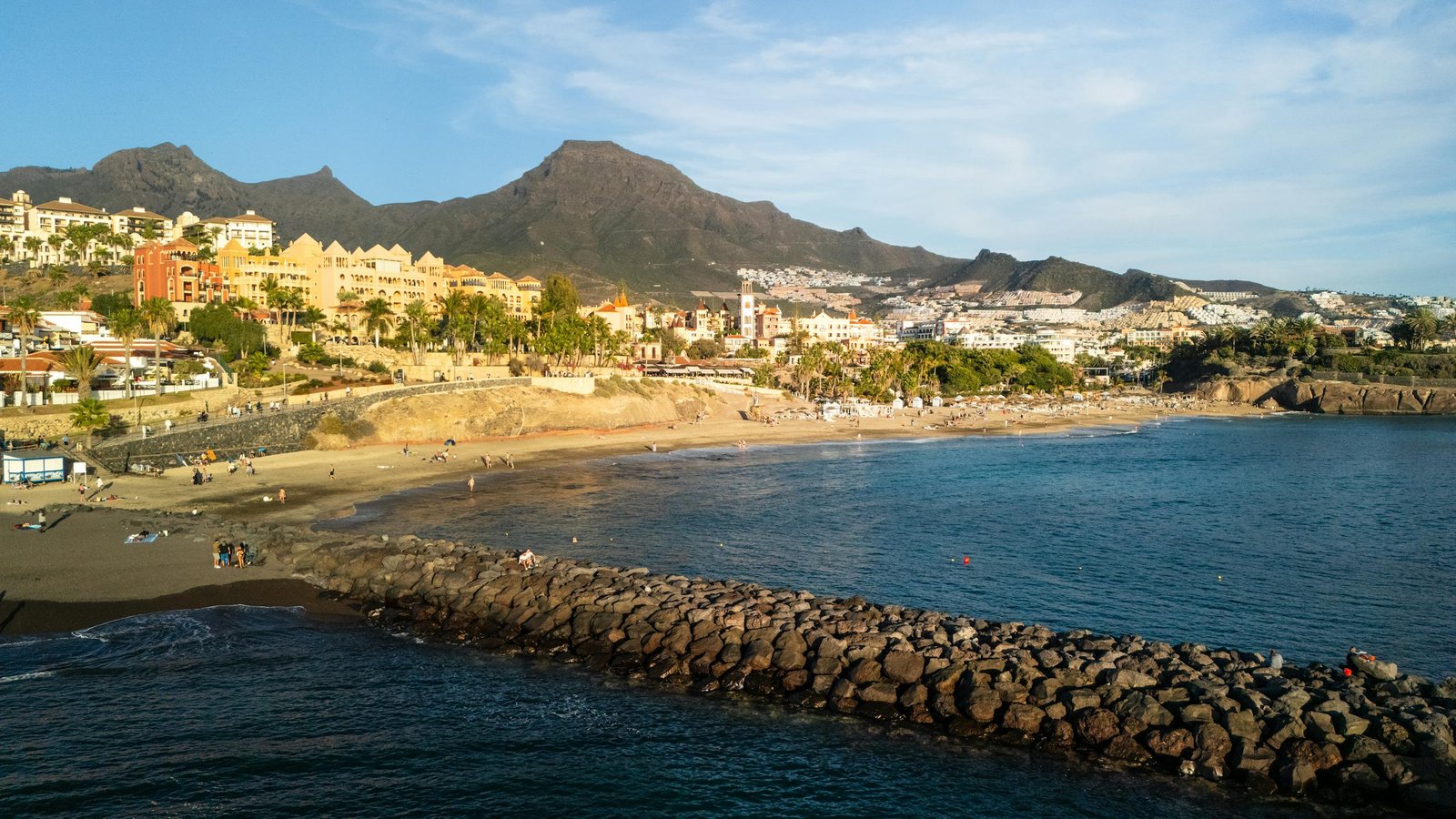
Adeje’s geography shapes its identity.
Perched between the cliffs of the Barranco del Infierno and the Atlantic coast, it’s both sheltered and open — a metaphor for its people.
Historically isolated from the island’s urban centers, Adeje developed its own rhythms and traditions. Life revolved around agriculture, family, and faith, but also around creativity — music, humor, and celebration were survival tools long before they became tourist attractions.
Today, that same creativity still defines Adeje, whether in its Carnival parades or the small-town warmth that makes visitors feel instantly included.
Carnival: The Heartbeat of Adeje’s Year
Carnival isn’t an event in Adeje — it’s an identity.
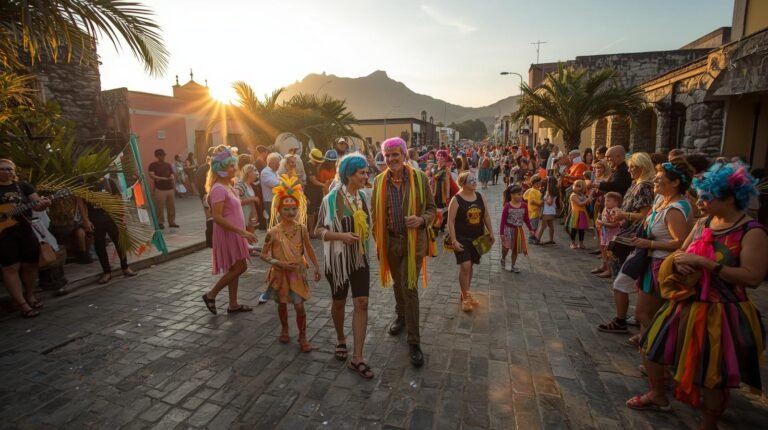
Each February, the town transforms into a living theater of laughter, music, and color. But Adeje’s Carnival stands apart from the massive spectacles elsewhere in Tenerife. It’s not about spectacle — it’s about belonging.
Let’s explore its layers :
a. The History of Carnival in Adeje
Carnival of Adeje began in secrecy — small courtyard dances, handmade masks, whispers of laughter when laughter was forbidden. Over the centuries, it survived bans, droughts, and dictatorship, reborn every time through the creativity of ordinary people.
Read: The History of Carnival in Adeje – Parts 1 & 2
b. How Adeje Celebrates Carnival
Today, Carnival remains family-first. Schools, neighborhoods, and community groups create costumes, rehearse dances, and organize parades that feel more like reunions than performances.
Read: How Adeje Celebrates Carnival: A Local Perspective Beyond the Parades
c. Carnival in Adeje 2026 – Events and Traditions
If you plan to visit, you’ll find dates, highlights, and insider tips for each event — from the “Baile de Piñata” closing dance to the costume contests that locals take delightfully seriously.
Read: Carnival in Adeje 2026: Dates, Events, Traditions & Local Tips
d. What Makes Adeje’s Carnival Different
While Santa Cruz dazzles the world, Adeje whispers to the heart. It’s smaller, warmer, and deeply personal — a celebration for locals that visitors are kindly invited to join.
Read: What Makes Carnival in Adeje Different from Other Carnivals in Tenerife
The History Beneath the Celebration
To understand Adeje’s joy, you must first know its endurance.
a. The History of Adeje Before Tourism
Long before hotels, Adeje was built on agriculture, sweat, and patience.
Fields of tomatoes, wheat, and bananas shaped its economy. Families relied on each other and on ingenuity — especially in managing scarce water.
Read: The History of Adeje Before Tourism
b. How Adeje Transformed into a Global Destination
In just a few decades, Adeje evolved from a quiet rural town into one of Europe’s most admired examples of sustainable tourism and modern urban planning.
But this transformation didn’t happen by chance — it was built step by step through vision, courage, and a deep respect for local values.
During the 1960s and 70s, Adeje was still defined by agriculture and emigration. Families depended on banana plantations, small farms, and seasonal work. The first roads connecting Adeje to the rest of the island marked the beginning of change.
When tourism arrived in southern Tenerife, many towns lost control of their growth. Adeje didn’t.
Its leaders decided to grow with intention — protecting natural spaces like Barranco del Infierno, limiting high-rise construction, and investing in schools, cultural centers, and local festivals.
This planning turned Adeje into a case study of balance:
- a destination where visitors find luxury without losing authenticity,
- and a town where locals still know their neighbors.
Today, Adeje stands not as a product of tourism, but as proof that development can coexist with heritage — when vision meets responsibility.
Legends, Myths & Memory
Adeje’s past is stitched together by stories — some factual, others mystical, all meaningful.
In the shadows of cliffs and ancient trails, locals still speak of voices in the ravine and lost treasures.
a. Ancient Legends and Stories from Adeje’s Past
From Guanche springs said to hold eternal water to the mysterious “White Lady of Fañabé,” these tales reveal how the people of Adeje gave personality to their landscape.
Read: Ancient Legends and Stories from Adeje’s Past
b. Unknown Facts About Adeje
Beyond legends lie the quieter truths — the untold history of land, migration, and resilience that even many residents don’t know.
Read: Unknown Facts About Adeje That Even Locals Rarely Talk About
Culture in Everyday Life
Culture in Adeje isn’t locked in museums; it’s lived.
It’s in the rhythm of parrandas (folk jam sessions), the taste of gofio at breakfast, the laughter that fills plazas after sunset.
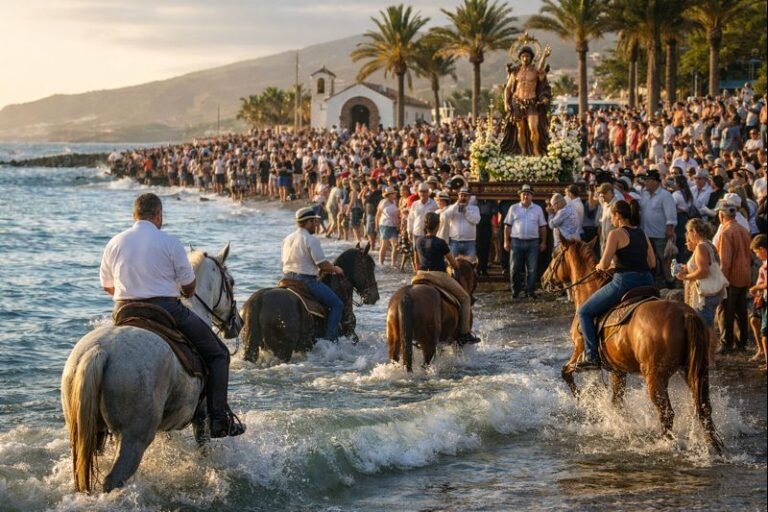
Annual festivals like San Sebastián or La Encarnación mix devotion and joy — saints carried through streets, followed by dancing, food, and fireworks.
In Adeje, religion and revelry are not opposites; they’re complementary expressions of gratitude for life itself.
The People Who Shape the Present
Modern Adeje thrives because its people understand both heritage and progress.
- Artists weave local themes into contemporary works.
- Cultural associations teach traditional dance and music to children.
- Schools include local history in their curriculum.
- New residents are welcomed into existing traditions instead of replacing them.
This intergenerational continuity ensures that Adeje’s culture evolves — without erasing its roots.
Where Culture Meets Visitors
For travelers, culture in Adeje isn’t something you watch — it’s something you join.
Attend a local festival, visit the Centro Cultural de Adeje, or explore Barranco del Infierno, where ancient rituals once met the modern hiking trail.
Don’t just photograph the parade — talk to the people behind it.
That’s where you’ll find the real Adeje: generous, grounded, joyful.
A Town That Balances Progress and Preservation
Adeje’s story is a masterclass in equilibrium.
It welcomes the world without losing itself.
Its festivals grow, but stay local.
Its history deepens even as its skyline rises.
Few places manage that balance — and that’s what makes Adeje not just a success story, but a model for cultural sustainability.
To understand Adeje, you have to look beyond the postcards.
Behind every hotel, there’s a field that once fed a family.
Behind every song, a story.
Behind every laugh, a memory of hard times overcome.
Adeje’s culture, carnival, and history form one continuous narrative — of resilience, reinvention, and community.
It’s not the story of a place that changed overnight; it’s the story of a place that changed well.
If Tenerife is the island of contrasts, Adeje is its heart — beating steadily between past and present, between laughter and legacy.