Romería in Adeje: Tradition, Food, and Fiesta All in One

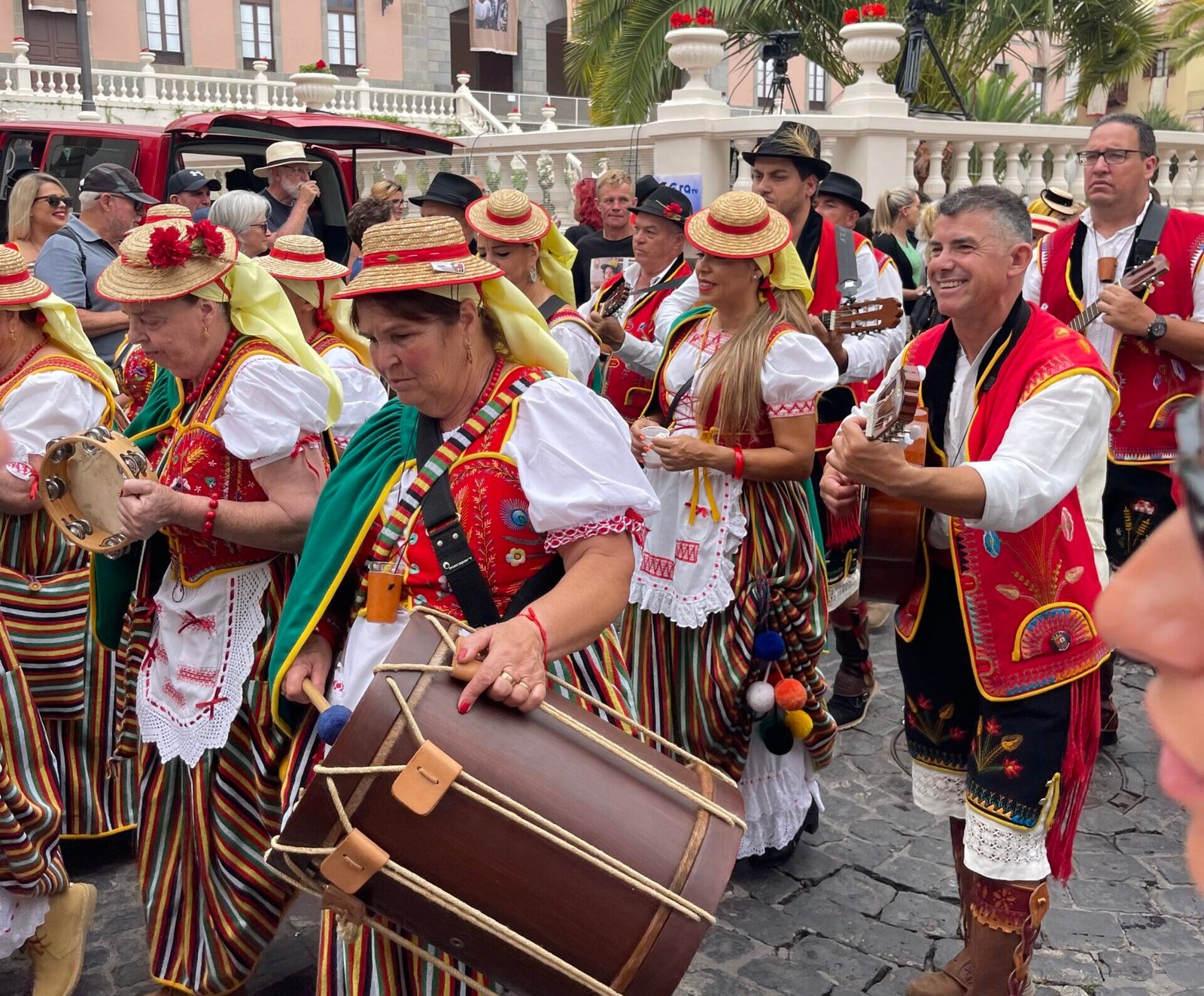
If you land in Tenerife on the right Sunday, you might think you’ve stepped back in time. Streets close to traffic. Oxen decorated with ribbons pull wooden carts piled high with fruit, wine, and roasted meat. Women in long skirts and lace headdresses laugh as they pass, while men in straw hats strum timple guitars and hand you a cup of local wine. The air is thick with the smell of grilled pork and mojo sauce, and music bounces off the cobbled streets.
Congratulations—you’ve just stumbled into a romería.
More than a parade, a romería is Tenerife’s way of mixing faith, farming traditions, and fiesta into one unforgettable day. Each town has its own version, tied to its patron saint, and each one feels both deeply spiritual and joyfully human. People pray, people dance, people eat—and everyone is welcome, whether you’re a lifelong local or a curious traveller.
And the best part? Adeje’s romería is the last romería of the year—a grand finale to Tenerife’s festive season.
🌾 What Is a Romería?
The word romería comes from romero—a pilgrim travelling to Rome. In Tenerife, though, it’s not about Italy. It’s about honouring your town’s patron saint with a joyful procession.
Ox carts, folk music, dancers, roasted food, free-flowing wine—it’s part religious devotion, part community party. And unlike many festivals around the world, you don’t need a ticket: if you’re there, you’re family.
📖 A Short History of Romerías
Romerías in Tenerife date back to the 16th century, when farmers gave thanks to saints for good harvests or protection. Pilgrimages grew into processions, and over time, Canarians added what they love most: food, wine, and music.
Today, they’re one of the island’s most treasured traditions, bringing together faith and folklore.
🏝️ How Many Romerías Are There in Tenerife?
From spring to autumn, Tenerife is packed with romerías. Some of the most famous include:
- Romería de Tegueste (April) – one of the oldest on the island.
- Romería de San Benito Abad (La Laguna, July) – the biggest and most international.
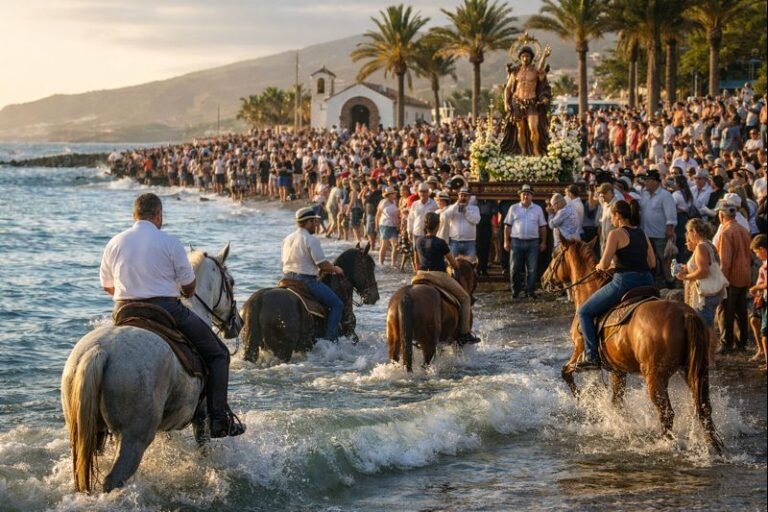
- Romería de San Roque (Garachico, August) – famous for its seaside charm.
- Romería de Adeje (October) – the last romería of the year.
Each town celebrates its saint, each romería has its own flavour—but Adeje closes the calendar with style.
🎉 The Romería of Adeje
Adeje’s romería honours its three patron saints: Nuestra Señora de la Encarnación, Santa Úrsula, and San Sebastián. Held in mid-to-late October, it transforms the old town into a living postcard of Canarian tradition.
Locals dress in traditional clothing, oxen pull carts decorated with palm leaves, flowers, and fruits, and folk bands set the rhythm with guitars and drums. Visitors are offered grilled meat, papas arrugadas, mojo, and generous pours of local wine—free of charge.
It’s not staged for tourists. It’s the town celebrating its heritage, and everyone is invited.
🙌 Why You Shouldn’t Miss It
- Authenticity – this is living tradition, not a show.
- Food & Drink – free tastings, wine, and the friendliest hospitality.
- Atmosphere – colour, music, dancing, and laughter.
- Unique timing – Adeje’s romería is the last of the year, the perfect finale.
💡 Tip: Shops and supermarkets usually close for the fiesta. Arrive early, wear comfy shoes, and bring a reusable cup to enjoy wine on the go.
📍 Practical Info
- Where: Adeje town centre
- When: Mid–late October (exact date confirmed by Ayuntamiento de Adeje)
- For who: Families, culture lovers, curious travellers
- More info: Adeje Town Hall Official Site
They say the best things in life are free—and Adeje’s romería proves it. Free food, free wine, free music, and a crash course in Canarian joy. Forget fancy restaurants and booked-out shows: for one glorious day in October, the streets of Adeje become the best stage in Tenerife. Don’t just watch it—join it.