The History of Carnival in Adeje (Part 1)

Carnival in Adeje did not begin with stages, sound systems, or official programs.
Long before it became a scheduled cultural event, carnival existed quietly—in homes, fields, and back streets—shaped by necessity, creativity, and a deep human need for expression.
Its story is intertwined with Adeje’s social, political, and economic past. Understanding that story explains why Adeje’s carnival still feels different today: smaller in scale, warmer in tone, and profoundly human.
Origins of Carnival in the Canary Islands
Carnival arrived in the Canaries with Spanish and Portuguese settlers in the 15th and 16th centuries. It was originally part of the Catholic calendar, marking one final burst of joy before Lent.
But on Tenerife, the tradition quickly took local shape. Islanders added humor, satire, and island music. Over time, it became less about religion and more about release—a celebration of community life under difficult conditions.
Early Carnival in Adeje: Modest, Local, and Informal
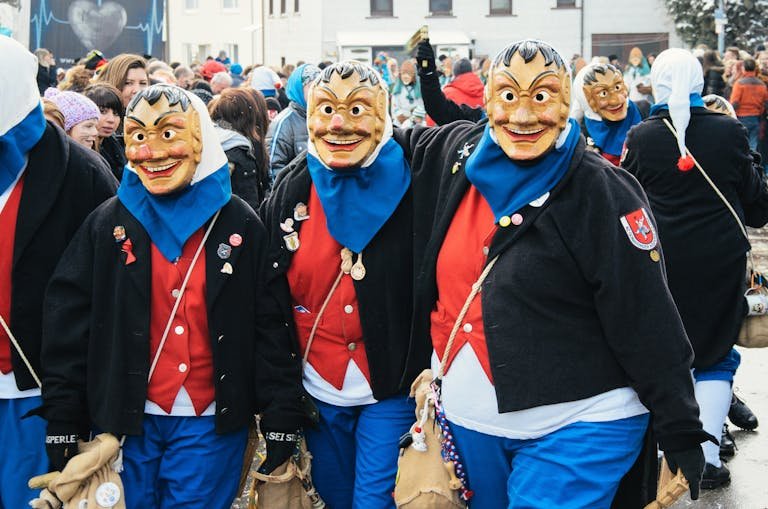
In its earliest form, Adeje’s carnival wasn’t a public event. There were no floats or judges. Celebration happened in courtyards and narrow lanes, with improvised disguises and homemade music.
Costumes served not to impress but to protect anonymity—allowing jokes about local figures and harmless mischief without consequence. Carnival was social oxygen: a few nights of laughter in otherwise hard lives.
Carnival and Rural Life
For centuries Adeje was rural, defined by subsistence agriculture and water scarcity. That reality shaped carnival’s character.
Because resources were scarce:
- Costumes were stitched from whatever fabric remained at home.
- Instruments were improvised from tins, wood, and imagination.
- Food shared at gatherings came from the same week’s harvest.
This simplicity made the celebration democratic. Everyone, from landowner to laborer, could participate on equal ground—once a year.
Satire as Social Commentary
Even the smallest Adeje carnival included satire. Behind masks, villagers parodied authority—priests, landowners, even each other. It wasn’t rebellion; it was release.
This tradition of gentle mockery still defines Adeje’s humor today.
The laughter said what could not otherwise be said.
Periods of Restriction and Silence
During political repression in Spain, public carnival was banned. In Adeje, celebrations retreated behind closed doors or disguised themselves as “private dances.”
Yet the rhythm never stopped. Families met in barns; musicians played softly; neighbors shared secret smiles. Carnival survived precisely because it went underground—an act of quiet defiance.
The Return to Public Space
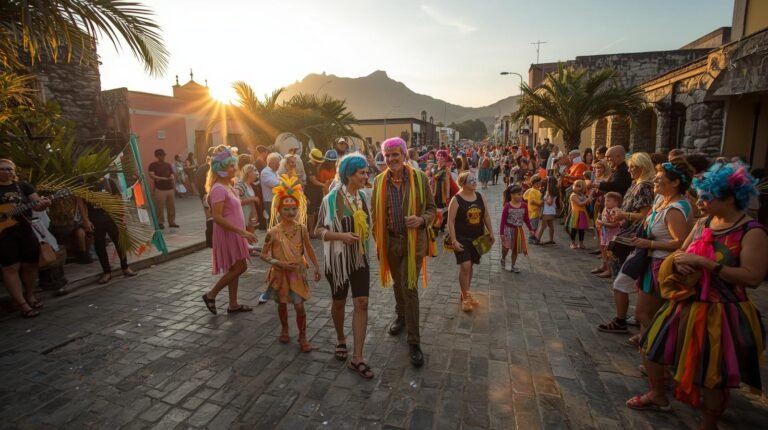
As restrictions eased in the 1970s, Adeje’s carnival returned cautiously to the streets. The first parades were modest—handmade costumes, borrowed instruments, endless enthusiasm.
Local associations, not external promoters, organized the events.
This grassroots spirit became the blueprint for every carnival that followed.
Tourism and Its Influence
With the rise of tourism in southern Tenerife, Adeje’s carnival gained visibility. Tourists stumbled upon the celebration and were charmed by its authenticity.
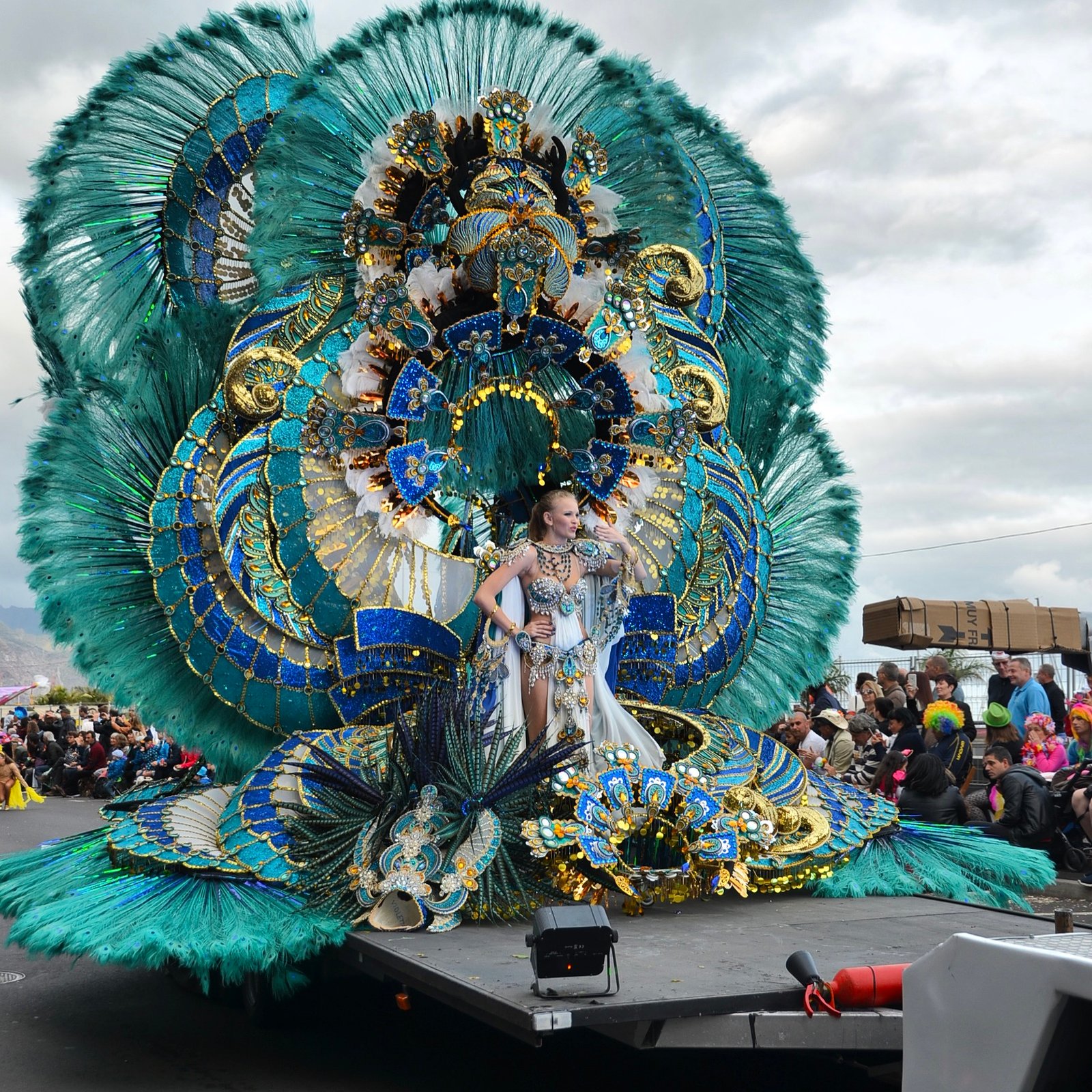
Municipal leaders saw an opportunity but moved carefully. Adeje resisted turning carnival into spectacle. It remained a community-first festival where locals performed for themselves, not for cameras.
Why Adeje’s Carnival Feels Different
While neighboring cities scaled up, Adeje stayed human-sized.
Events were organized around families, schools, and associations rather than corporate sponsors.
That’s why Adeje’s carnival still feels intimate: it grew at the pace of trust, not marketing.
Continuity Through Change
Across the decades, Adeje’s carnival changed in form but not in essence.
Drums grew louder, costumes brighter—but the heartbeat stayed the same: laughter, solidarity, and self-expression.
Each generation adapted it to its time while keeping the same invisible promise—that every February, Adeje will remember who it is.
From whispered celebrations to street parades, Adeje’s carnival endured droughts, prohibitions, and modernization.
Its resilience lies in the people who kept it alive—not institutions, not money, but families and neighbors.
In Part 2, the story continues with the rebirth of the modern carnival, the rise of community groups, and the balance between tourism and tradition that defines Adeje today.
➡️ Continue reading the story in Part 2: The History of Carnival in Adeje – From Hidden Tradition to Public Celebration.