Unknown Facts About Adeje That Even Locals Rarely Talk About

Adeje is often described through its coastline, resorts, and modern infrastructure, yet beneath this familiar image lies a layered history filled with overlooked details, quiet transformations, and stories that rarely make it into guidebooks or official narratives. Even many long-term residents are surprised to learn how complex Adeje’s past truly is.
This article explores lesser-known facts about Adeje—not sensational myths, but carefully grounded realities that reveal how the municipality evolved socially, politically, and culturally long before it became internationally recognized.
Adeje Was Once One of the Most Influential Territories in Southern Tenerife
Before modern administrative divisions, Adeje held a position of influence that extended far beyond its current boundaries. Historically, it functioned as a regional center for surrounding rural areas, particularly during the post-conquest period.
Land ownership, agricultural production, and labor organization were often coordinated from Adeje, giving it a quiet but substantial role in the island’s southern economy. This influence was not always visible, but it shaped settlement patterns that still exist today.
The Power of Land Shaped Social Hierarchies for Centuries
One of the least discussed aspects of Adeje’s history is how land concentration affected social life well into the 20th century. Large estates dominated the landscape, and access to land determined economic security, social mobility, and even political voice.
For generations:
- Families worked land they did not own
- Employment was seasonal and uncertain
- Communities were deeply interconnected through labor
This legacy explains why collective memory in Adeje remains closely tied to work, cooperation, and resilience.
Adeje’s Population Was Remarkably Stable for a Long Time
Unlike other areas that experienced waves of migration earlier, Adeje’s population remained relatively stable for centuries. Families stayed rooted, intermarried, and passed down oral histories within close-knit networks.
This stability contributed to:
- Strong local identity
- Deep knowledge of territory
- Resistance to rapid cultural change
It also meant that social shifts, when they did occur, felt particularly dramatic.
Water Management Was a Defining Challenge
One of the most underestimated factors in Adeje’s development is water scarcity. Long before tourism infrastructure, managing water was a daily concern that shaped settlement locations and agricultural practices.
Ingenious systems of:
- Channels
- Reservoirs
- Shared access agreements
were developed to ensure survival. Control over water often meant control over land productivity, adding another layer to social dynamics.
Religious Life Was More Practical Than Symbolic
While religious buildings remain visible landmarks, daily religious practice in Adeje was historically pragmatic rather than ceremonial. Faith was intertwined with agricultural cycles, weather patterns, and survival.
Religious gatherings often doubled as:
- Community meetings
- Information exchanges
- Social support systems
This practical approach influenced how traditions evolved, including festivals and communal celebrations.
Carnival Was Not the Only Suppressed Tradition
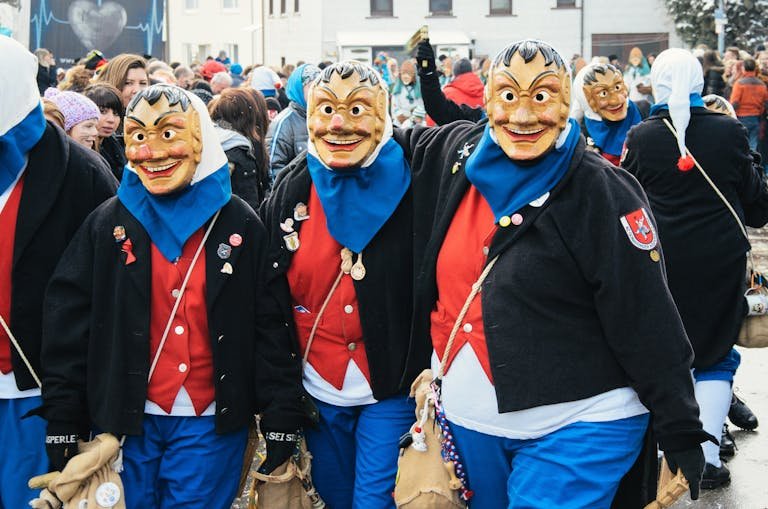
Although carnival is often highlighted as a tradition that survived periods of restriction, it was not alone. Other cultural expressions—music styles, informal gatherings, and oral storytelling—also adapted quietly.
Rather than disappearing, they moved into:
- Homes
- Fields
- Nighttime gatherings
This pattern of adaptation became a defining trait of Adeje’s cultural resilience.
Women Played a Central but Underrecognized Role
Historical narratives often overlook the role of women in Adeje’s development. Yet women were central to:
- Household economies
- Informal trade
- Cultural transmission
They preserved traditions through storytelling, food preparation, and social rituals, ensuring continuity even during times of hardship.
Why These Facts Rarely Get Discussed
Many of these realities are not widely talked about because they do not fit easily into modern narratives of success and development. They reflect complexity rather than simplicity, effort rather than ease.
Yet understanding these facts provides a more honest picture of Adeje—not just as a destination, but as a community shaped by centuries of adaptation.
Quiet Political Shifts That Redefined Adeje
One of the leastarest yet least discussed transformations in Adeje’s history is how political power gradually shifted from land-based authority to municipal governance. This transition did not happen overnight, nor was it marked by dramatic events. Instead, it unfolded slowly, almost invisibly, through administrative reforms and changing economic realities.
As traditional landowners lost influence and local councils gained responsibility, decision-making began to move closer to everyday life. Roads, schools, water distribution, and public spaces increasingly fell under municipal control. For residents, this shift changed not just who held power, but how problems were solved.
Many older residents remember this period not as “political reform,” but as a time when Adeje slowly began to feel more organized, more connected, and more future-oriented.
The Transition Into Tourism Was Not Immediate
Contrary to popular belief, Adeje did not suddenly become a tourism destination. The transition was gradual, uneven, and often uncertain.
Early tourism-related changes included:
- Small-scale accommodations rather than large resorts
- Seasonal employment that complemented agriculture
- Infrastructure improvements intended first for residents
For many families, tourism was initially seen as a supplement, not a replacement, for traditional livelihoods. Farming, fishing, and local trade continued alongside new opportunities for decades.
This slow transition allowed Adeje to adapt without completely losing its social fabric.
Cultural Losses That Are Rarely Acknowledged
While tourism brought economic stability and growth, it also led to subtle cultural losses that are rarely discussed openly.
These included:
- The disappearance of certain dialect expressions
- Reduced transmission of oral histories
- The fading of informal communal practices
Unlike physical heritage, these losses are difficult to document. They exist mainly in memory, making them easier to overlook and harder to recover.
Why Adeje’s Identity Remained Intact
Despite these changes, Adeje retained a strong sense of identity. This resilience can be attributed to several factors:
- Deep family roots
- Continued importance of local festivals
- Strong community networks
Rather than rejecting change, Adeje absorbed it selectively. Traditions evolved, but they did not vanish. New residents were integrated into existing social structures rather than replacing them.
This adaptability explains why Adeje feels lived-in rather than manufactured.
What Even Long-Term Residents Often Miss
Many residents grow up surrounded by the results of historical processes without being fully aware of them. Roads follow ancient paths. Neighborhoods reflect old land divisions. Festivals echo older social functions.
These connections are easy to miss because they are embedded in daily life. Yet they shape how Adeje functions today, from urban planning to community interaction.
Why These Unknown Facts Matter Today
Understanding these lesser-known aspects of Adeje’s history offers more than curiosity. It provides context for current debates about development, sustainability, and cultural preservation.
Recognizing that Adeje was shaped by:
- Scarcity
- Cooperation
- Gradual change
helps explain why community values still matter so deeply. It also encourages more thoughtful decisions about the future.
Adeje’s story is not one of sudden transformation or simple success. It is a layered narrative built on adaptation, resilience, and quiet perseverance. The facts discussed here may not appear in promotional material, yet they are essential to understanding the municipality as it truly is.
By acknowledging these lesser-known realities, both residents and visitors gain a deeper appreciation of Adeje—not just as a place, but as a community shaped by history in ways that still matter today.