Beyond the Beach: Exploring the Natural and Cultural Soul of Adeje

For most international visitors and new arrivals, Costa Adeje is immediately synonymous with golden sand beaches, luxury resorts, and oceanfront dining. However, anchoring your understanding of the region entirely to the coastline means missing half the story.
Just a short distance inland, climbing upwards toward the historic town center (Villa de Adeje) and the dramatic surrounding landscapes, lies a deeply rooted cultural and natural identity that gives this municipality its true character.
The Historic Heart: Villa de Adeje
While Costa Adeje hums with modern coastal energy, the historic hilltop town of Adeje sits quietly with centuries of history written into its streets. Established long before tourism reshaped the southern economy, the old town features traditional Canarian architecture, shady plazas, and the historic church of Santa Úrsula, which houses remarkable examples of religious art and wooden artesonado ceilings.
Walking through the historic center on a quiet afternoon reveals local life operating at an unhurried, traditional pace. It provides a striking and welcome contrast to the bustling beach promenades down below, reminding residents and visitors alike of the agricultural roots that once sustained the entire region.
Nature’s Masterpiece: Barranco del Infierno
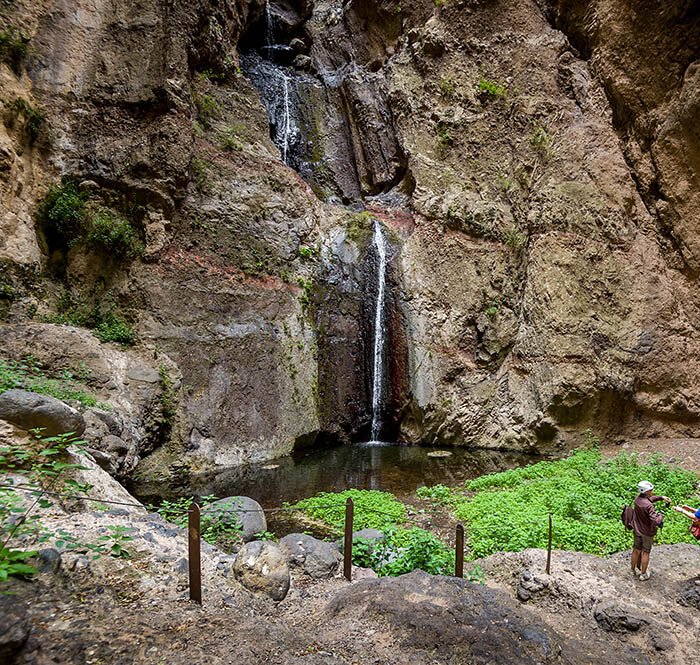
You cannot talk about the geography of Adeje without mentioning its most famous natural landmark: the Barranco del Infierno (Hell’s Gorge) Special Nature Reserve. This dramatic canyon is one of Tenerife’s most visited protected natural areas, offering a regulated hiking trail that leads visitors deep into a volcanic ravine flanked by sheer cliffs, ancient cave dwellings once used by the Guanche people, and a permanent waterfall at the trail’s end.
Because access is strictly controlled daily to preserve the fragile local ecosystem and protect endemic flora and fauna, securing a permit in advance is mandatory. Hiking the Barranco offers a profound appreciation for the volcanic geology that shaped the Canary Islands long before modern settlement.
A Living Heritage
What makes Adeje fascinating for long-term residents and culturally curious travelers is how seamlessly it bridges its agricultural past with its cosmopolitan present. Whether it is attending a local romería, sampling artisan cheeses and volcanic wines from southern vineyards, or simply wandering through the historic streets, Adeje offers an enriching depth that extends far beyond a standard beach holiday.