
Navigating Spanish AML Compliance: Why Property Funds Get Frozen in Tenerife

Acquiring high-value real estate in Costa Adeje frequently encounters an unexpected administrative bottleneck that catches foreign buyers off guard: stringent Anti-Money Laundering (AML) compliance.
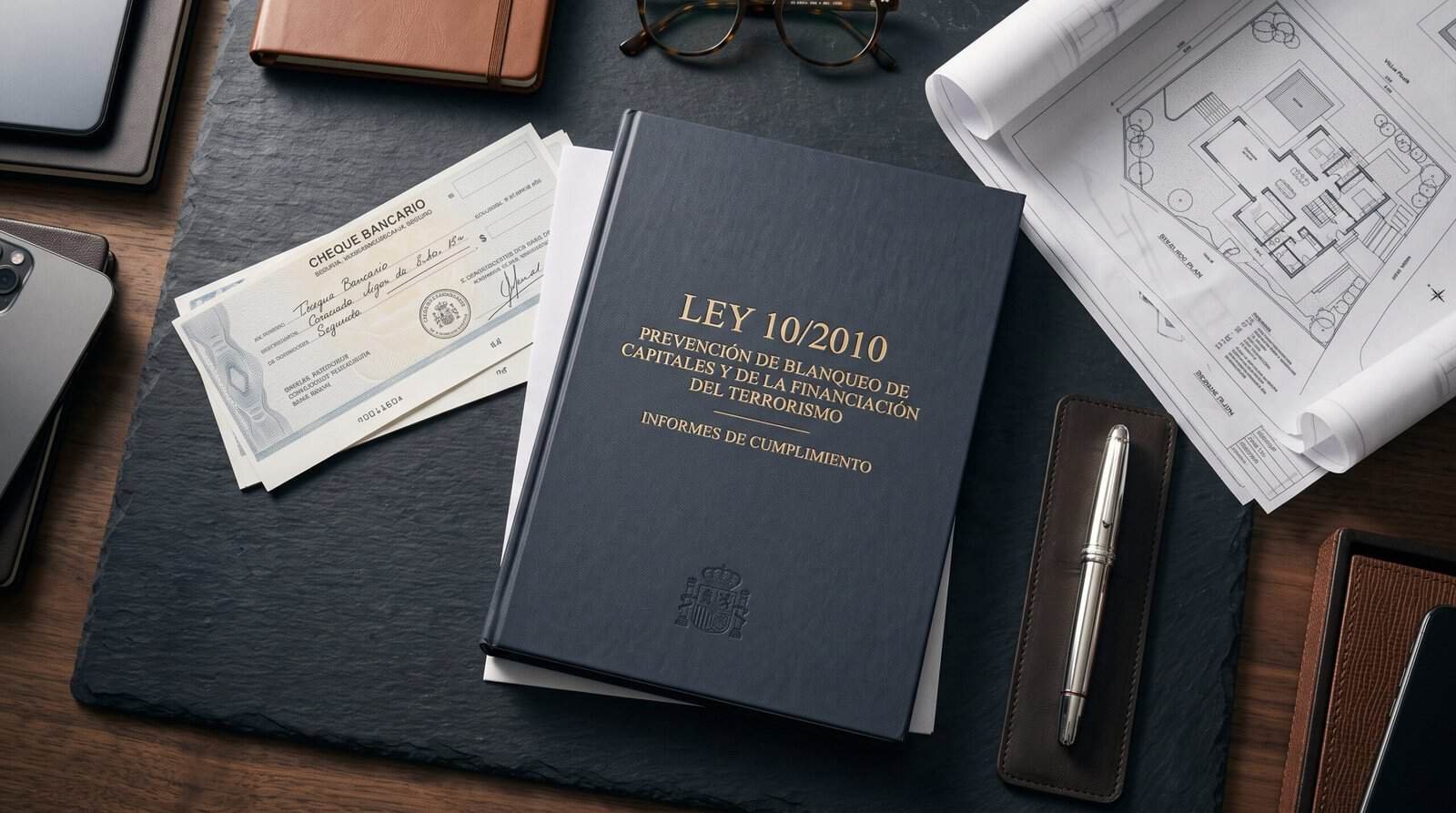
Under Spanish Law 10/2010 on the Prevention of Money Laundering and Terrorist Financing, financial institutions, Notaries, and Land Registrars operate under some of the strictest surveillance directives in the European Union. Transferring €500,000 or €2,000,000 to purchase a luxury villa without preemptive compliance clearance routinely leads to frozen accounts, delayed notary signings, and forfeited deposit contracts (Contratos de Arras).
The following technical guide outlines the compliance hurdles cross-border buyers face and the precise documentation required to clear capital for acquisition.
1. The Trigger: Why Spanish Banks Freeze Incoming Capital
International investors often assume that transferring funds from a reputable UK, Swiss, or EU bank guarantees immediate availability in Spain. This assumption is incorrect.
- Independent Compliance Mandate: Spanish banks cannot rely solely on the source bank’s verification. By law, they must independently verify the ultimate beneficial owner (UBO) and establish the legitimate origin of every euro entering their system.
- Automated Triggers: Wires exceeding €50,000 from foreign accounts automatically trigger internal algorithmic flags at compliance units (such as SEPBLAC reporting protocols). Without prior approval, incoming capital is placed in administrative quarantine (bloqueo preventivo).
- The Completion Risk: If funds remain blocked on completion day, the bank cannot issue the certified bank draft (cheque bancario) required to execute the public deed (Escritura). A buyer missing the completion date faces immediate default penalties under standard Arras agreements.
2. Documenting the Legitimate Source of Funds
To satisfy Spanish bank compliance officers, documentation must trace wealth back to its origin, not merely prove current bank balances.
- Company Dividends or Retained Profits: Requires certified company tax returns (e.g., UK Corporation Tax filings), audited financial statements, and formal board resolutions detailing dividend distributions.
- Asset Liquidation (Shares or Cryptocurrencies): Brokerage account statements documenting the acquisition timeline, disposal execution receipts, and proof of capital gains declarations in your home jurisdiction.
- Inheritance: Official probate documents, registered wills, and clearance tax certificates proving estate taxes were settled abroad.
- Business Sale: The formal sales contract (Share Purchase Agreement), proof of capital transfer, and official regulatory filings.
3. Sworn Translations and Apostilles: The Technical Bottleneck
Submitting paperwork in English, German, or French without adhering to Spanish legal standards results in instant rejection by bank compliance departments.
- The Hague Apostille: Any official public document originating outside Spain (court documents, tax agency certificates, probate grants) must bear the Hague Apostille to have legal standing.
- Traducción Jurada: Financial and legal documentation must be translated into Spanish exclusively by a certified sworn translator (Traductor Jurado) accredited by the Spanish Ministry of Foreign Affairs (MAEC). Unofficial translations hold zero legal value.
4. The Notary’s Legal Oversight: Acta de Titularidad Real
The scrutiny does not stop at the bank. On the day of signing, the Spanish Notary Public acts as a state compliance officer.
- Corporate Purchasing Structures: If you acquire a Costa Adeje property through an offshore trust, a UK Limited company, or a Luxembourg holding structure, the Notary is legally required to identify the natural person owning or controlling more than 25% of the entity.
- Execution of the Deed: The Notary will execute a formal Acta de Titularidad Real identifying the ultimate beneficial owners. If the corporate ownership structure is opaque or layered through jurisdictions deemed non-cooperative, the Notary will refuse to authorize the Title Deed.
5. Best Practices: The 6-Week Pre-Approval Timeline
To ensure transaction security when acquiring prime Costa Adeje assets, maintain the following protocol:
- Open Accounts Early: Initiate account opening procedures with an established Spanish private bank at least 6 to 8 weeks prior to expected completion.
- Submit the Dossier in Advance: Provide your complete, apostilled, and sworn-translated wealth dossier to the bank’s compliance department before wiring the capital.
- Secure Written Clearance: Wire funds only after receiving formal written confirmation that compliance verification is concluded.
- Coordinate with Legal Counsel: Have your independent conveyancing lawyer liaise directly with the bank branch manager and the Notary to confirm payment draft mechanics 48 hours prior to signing.
Executing a high-value real estate transaction in Tenerife requires strict alignment with Spanish regulatory controls; conducting preemptive anti-money laundering due diligence with specialized cross-border legal counsel guarantees your acquisition capital clears without administrative friction.