Selling a Villa in Tenerife: Understanding the 3% Non-Resident Retention Tax

When non-resident investors decide to liquidate a real estate asset in Costa Adeje, they often expect to receive the full agreed purchase price at the Notary, minus standard agency commissions. However, the Spanish tax system employs a strict withholding mechanism to ensure foreign sellers do not leave the jurisdiction without settling their capital gains liabilities.
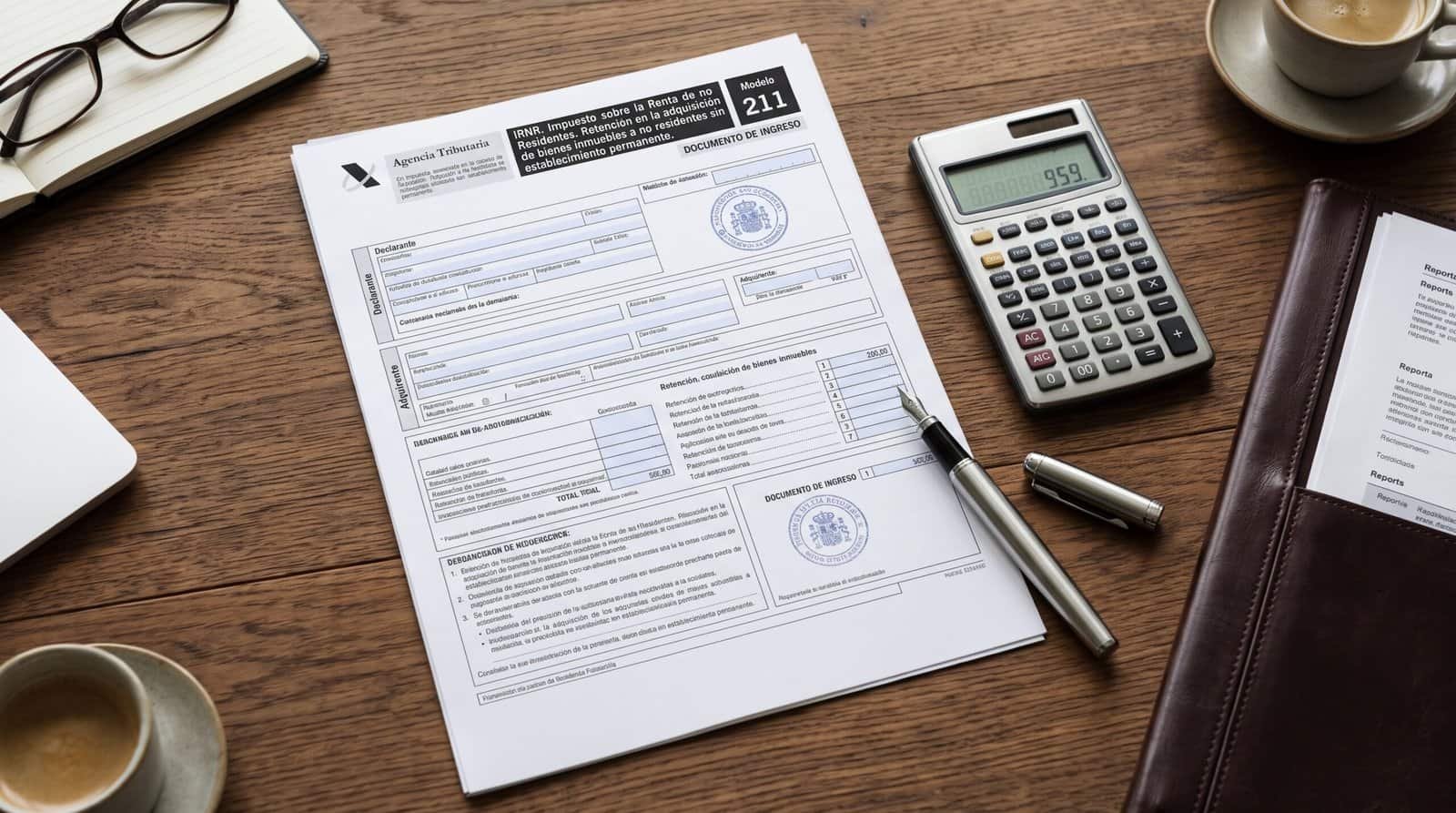
This mechanism is the 3% non-resident retention, formally processed via the Modelo 211 tax declaration. Understanding how this retention works, when it applies, and the administrative process required to reclaim it is a fundamental part of an investor’s exit strategy.
The Mechanics of the 3% Retention
Under Spanish tax law, if the seller of a property is a non-resident in Spain, the buyer is legally obligated to withhold 3% of the total purchase price at the moment the deed of sale (Escritura de Compraventa) is signed at the Notary.
For example, if you are a UK tax resident selling a luxury villa in La Caleta for €2,000,000, the buyer will only transfer €1,940,000 to your account. The buyer’s legal representative will take the remaining €60,000 and pay it directly to the Spanish Tax Agency (Agencia Tributaria) using the Modelo 211 form within one month of the sale.
This 3% is not a definitive tax; it is an advance payment held by the tax authority on account of your final Capital Gains Tax (Impuesto sobre las Ganancias Patrimoniales), which is currently levied at a flat rate of 19% for non-residents from the EU and EEA.
The Capital Gains Calculation (Modelo 210)
Within four months of the sale, the non-resident seller must file a final tax declaration (Modelo 210) to calculate their actual capital gain. The calculation is the difference between the original acquisition value (purchase price plus taxes, Notary fees, and major structural improvements) and the transmission value (sale price minus agency fees and local Plusvalía tax).
- Scenario A (Tax Due is Higher than the Retention): If your actual 19% capital gains tax bill amounts to €100,000, and €60,000 was withheld at the Notary, you must pay the remaining €40,000 balance to the Spanish Tax Agency.
- Scenario B (Selling at a Loss or Minimal Gain): If you sell the property for less than you paid, or if the 19% tax on your profit is less than the €60,000 withheld, you have the legal right to claim a refund of the excess retention.
The Reclaim Process and Delays
Reclaiming the 3% retention is a notoriously slow administrative process. To initiate a refund, your Spanish legal or fiscal representative must file the Modelo 210 alongside comprehensive documentation proving the original purchase costs and the final sale figures.
Furthermore, the tax authority will only authorize a refund if they verify that the seller has no outstanding tax debts in Spain. This includes ensuring that the annual Non-Resident Imputed Income Tax (Modelo 210 for empty properties) was filed and paid for every year the property was owned. If there are missing years, the tax office will automatically deduct the unpaid amounts and late penalties from the 3% refund.
Even with a flawless application, the Spanish Tax Agency legally has up to six months to process the refund. In practice, non-resident sellers routinely wait eight to ten months for the funds to clear back into their accounts. If the agency exceeds the six-month statutory deadline, they are obligated to pay statutory interest on the delayed refund.
Factoring the 3% retention into your exit strategy ensures accurate liquidity projections and allows your legal team to prepare the necessary reclamation filings immediately after completion.