The festive season in South Tenerife: how residents actually navigate December and January

December in Costa Adeje has a distinct rhythm that catches most newcomers off guard. On paper, it is mild Atlantic winter—daytime temperatures hovering around 22°C, sunsets just after 18:15, and palm trees strung with warm lights.In practice, it is also the single busiest three-week stretch of the year on the south coast, when winter tourism peaks at the exact same time local Spanish life slows down for family traditions.
The difference between a stressful festive season and an effortless one comes down to knowing when to lean into coastal hospitality, when to stay home, and which local dates are actually worth putting in your calendar.
24 December (Nochebuena): the dinner decision
In Spain, Christmas Eve is the main family event, not Christmas Day. Up in Adeje pueblo, shutters come down by early evening and streets empty out well before 21:00. Down on the coast, hospitality stays open, which leaves residents with two clear ways to play the evening.
The first is booking a menú cerrado (set festive menu) in areas such as La Caleta or El Duque. Most serious kitchens suspend à la carte service on 24 December in favour of a four- or five-course menu built around local fish, shellfish, or roast meats. The advantage is zero preparation and an unhurried evening; the catch is that the better tables are reserved weeks in advance, and you are committing to a fixed timing and price.
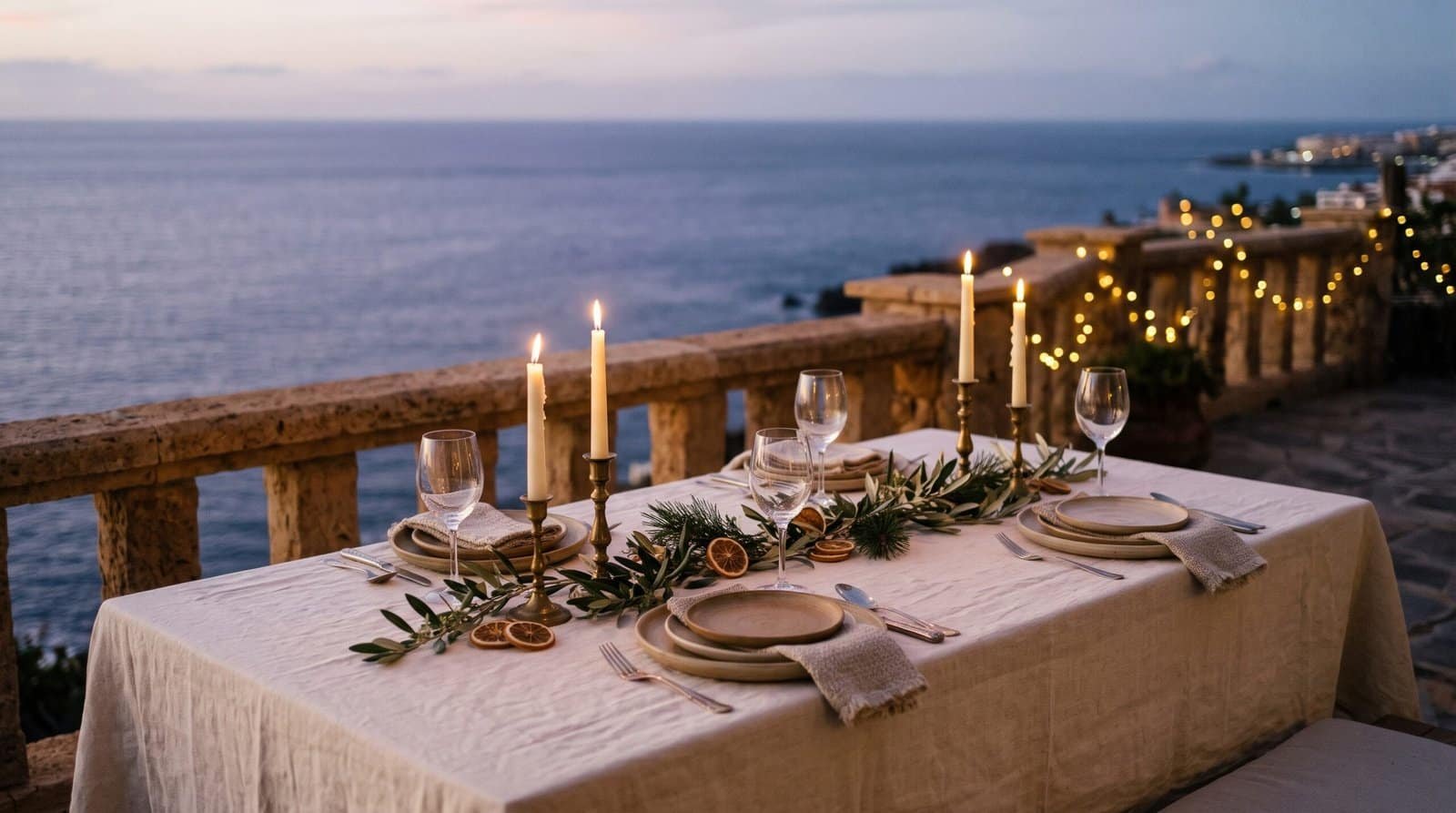
The second—and arguably the more rewarding option once you live here—is hosting dinner on your own terrace.Coastal evenings rarely dip much below 18°C, so a light jacket is enough for an outdoor table. The key is planning your shopping around local schedules: the Agromercado de Adeje (in Las Nieves) only operates on Wednesday afternoons and weekend mornings, so sourcing fresh local cheeses, produce, and Canarian wines requires a bit of forward planning rather than a last-minute dash. Pair that with fresh local fish—cherne, sama, or vieja from a local fishmonger—and you get a far better evening than most hotel dining rooms offer.
25 December (Navidad): quiet mornings and the Santa Cruz concert
Christmas morning in Costa Adeje is one of the few times the coast feels genuinely calm. While Northern Europe is indoors, a steady stream of long-term residents heads down to Playa del Duque or the sheltered cove at La Caleta for a morning swim before the sunbeds fill up, followed by a long lunch outdoors.
For an evening cultural anchor, the island’s flagship event is the Concierto de Navidad de Puertos de Tenerife,performed annually on 25 December by the Orquesta Sinfónica de Tenerife in the open air at the Dársena de Los Llanos in Santa Cruz. It is a genuinely impressive setting, though it comes with two practical caveats: tickets sell out well in advance, and the drive up the TF-1 motorway takes 50 to 60 minutes each way. Many south-coast residents skip the late-night drive and watch the live broadcast on regional television instead.
31 December (Nochevieja): avoiding the markup and the taxi trap
New Year’s Eve is where coastal hospitality becomes most polarised. Many hotels and waterfront restaurants run formal gala dinners starting around 20:00, complete with wine pairings, live music, and las doce uvas de la suerte—the twelve grapes eaten one by one with the twelve chimes of midnight. While the better kitchens deliver a polished evening, seasonal markups across the tourist strip can be steep, and full prepayment is standard.
If you prefer to avoid paying peak-season premiums for a crowded room, hosting a small dinner at home is the standard resident workaround. Elevated neighbourhoods like Torviscas Alto, San Eugenio Alto, and El Madroñal have clear views of the midnight fireworks launched along the Costa Adeje and Playa de las Américas coastline. Alternatively, the Adeje Town Hall organises free, open-air Fiestas de Fin de Año with live orchestras in Adeje pueblo (Plaza de España) and coastal squares such as Plaza de San Sebastián in La Caleta—the exact schedule is published each December.
One logistical detail worth knowing in advance: hailing a taxi in Costa Adeje between 00:30 and 03:00 on 1 January is notoriously difficult. If you are dining out on Nochevieja, either choose somewhere within walking distance or pre-arrange a private transfer well ahead of time.
1 January (Año Nuevo): two ways to reset
New Year’s Day in South Tenerife is best spent outside. Between 08:30 and 10:00, the coastal promenade stretching from La Caleta through El Duque to Fañabé is almost completely empty, with clear winter light and flat ocean views before the beach clubs open.
If you want a complete change of pace, the drive up into Teide National Park via Vilaflor takes just over an hour from Costa Adeje. Above 2,000 metres, the air is sharp, the pine forests are quiet, and the volcanic landscape feels completely detached from the holiday crowds on the coast. Check road status before leaving, as occasional winter ice can temporarily close the upper access roads.
5 and 6 January (Reyes): the real local finale
Most winter visitors fly home on 2 or 3 January, which is precisely when the most authentic part of the Spanish festive calendar begins.
On the evening of 5 January, Adeje pueblo hosts its Cabalgata de Reyes (Three Kings’ Parade). Following local tradition, the Three Kings arrive by helicopter at the municipal football stadium in the late afternoon before joining the floats that move along Calle Grande to the Iglesia de Santa Úrsula. It is loud, community-driven, and entirely different in tone from the coastal resorts. Parking in the upper town fills up early, so heading up before dusk—or taking a short taxi from the coast—saves circling the streets.
The season closes on 6 January (Día de los Reyes Magos), a strict national public holiday. The morning belongs to coffee and Roscón de Reyes—the ring-shaped brioche flavoured with orange blossom water and topped with candied fruit, sold plain or filled with nata (fresh cream) or trufa (chocolate cream). Order yours from a local pastelería in Adeje pueblo or Fañabé on 4 January; waiting until the morning of the 6th means long queues and picked-over shelves.Inside every roscón sit two hidden tokens: a small figurine for good luck, and a dried broad bean (haba), which traditionally obliges the finder to buy next year’s cake.
Structuring your December and January around a mix of pre-booked coastal dinners, home-hosted evenings, and Adeje’s traditional municipal dates allows you to enjoy the winter season without the friction of peak tourist crowds.