
Is Costa Adeje Expensive?

A Realistic Comparison with Other Parts of Tenerife (2026)
People rarely ask whether Costa Adeje is cheap.
What they really want to know is whether it is worth what it costs, especially when compared to other places on the island that seem, at least on paper, more affordable.
The problem is that “expensive” in Tenerife is a slippery word.
It can mean higher rent, yes — but it can also mean fewer compromises, less daily friction, or simply paying for a lifestyle that functions smoothly without constant adjustments.
This article is not about finding the cheapest corner of the island.
It is about understanding what you are actually paying for when you choose Costa Adeje, and how that choice compares with other well-known areas of Tenerife in 2026 — in daily life, not in theory.
What People Usually Mean When They Say “Costa Adeje Is Expensive”
When someone says Costa Adeje is expensive, they are almost always talking about rent, even if they don’t realise it.
Rental prices here are visibly higher than in many other parts of Tenerife, particularly when compared with inland towns or northern areas. Sea proximity, newer buildings, and neighbourhoods designed around long-term comfort rather than density all push prices upward. That part is real, and it’s important not to downplay it.
What often gets missed is that rent is doing a lot of hidden work.
In Costa Adeje, higher rent often translates into walkability, predictable services, better-maintained buildings, and fewer daily logistics. Supermarkets, pharmacies, cafés, beaches, and public transport tend to sit within a practical radius, which reduces the need for a car and lowers friction in everyday routines.
This is why many residents who initially move to cheaper areas later drift back toward Costa Adeje or its immediate surroundings. Not because it is cheaper — but because it is easier to live in without constantly negotiating trade-offs.
That distinction matters.
Costa Adeje vs Los Cristianos: Similar on the Map, Different in Practice
On paper, Costa Adeje and Los Cristianos look like close cousins.
They are geographically adjacent, share similar climate conditions, and attract both long-stay visitors and permanent residents.
In daily life, however, the experience diverges.
Los Cristianos is denser, more transit-heavy, and generally more affordable when it comes to rent, particularly for smaller apartments. It also carries more visible signs of long-established tourism, which can feel either comforting or tiring, depending on personal tolerance.
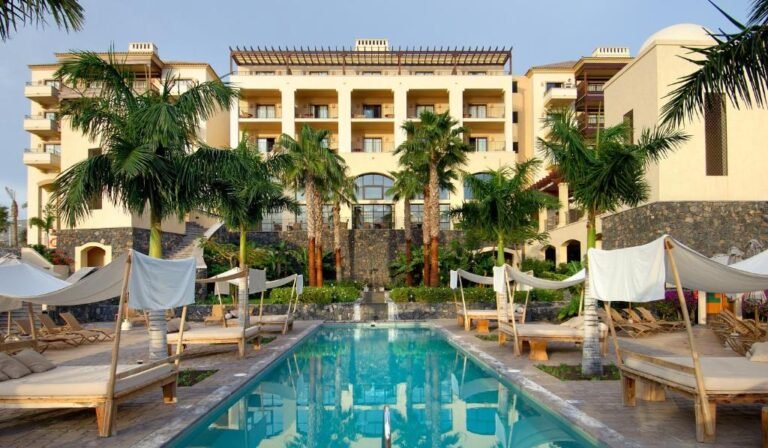
Costa Adeje, by contrast, feels more spaced out and deliberately structured. Residential zones are quieter, buildings tend to be newer, and the area is less dominated by port traffic and constant pedestrian flow. This often results in higher rental costs, but also in a calmer daily rhythm that many long-term residents prioritise once the novelty of “busy seaside life” wears off.
For some, Los Cristianos makes more financial sense.
For others, Costa Adeje makes more lifestyle sense.
Neither choice is universally better — but they are not interchangeable.
Costa Adeje vs Playa de las Américas: When Price Reflects Intent
Playa de las Américas is often grouped together with Costa Adeje, especially by people who don’t live here. From a distance, the coastline looks continuous, and the climate is identical.
In reality, the intent behind each area is very different.
Playa de las Américas was built first and fast, with tourism as its primary function. Many buildings are older, layouts are denser, and the area revolves around short-term stays, nightlife, and constant movement. Rent can be lower than in Costa Adeje, especially in older complexes, but the trade-off is noise, limited green space, and a daily rhythm that never quite slows down.
Costa Adeje, by contrast, feels planned for longevity. Streets are wider, residential zones are more clearly separated from entertainment areas, and the atmosphere is noticeably calmer once you move away from the beachfront. For people working remotely, living full-time, or simply wanting evenings that feel like evenings, this difference becomes significant.
The price gap between the two areas often reflects that intention. You are not paying more in Costa Adeje for proximity to clubs or foot traffic, but for a version of coastal living that is easier to sustain year after year.
Costa Adeje vs Puerto de la Cruz: The North–South Divide Is Real
Any serious comparison in Tenerife eventually runs into the north–south divide, and Puerto de la Cruz is the clearest counterpoint to Costa Adeje.
Puerto de la Cruz is often less expensive when it comes to rent, particularly for larger apartments. It has a strong local identity, a walkable historic centre, and a cultural life that appeals to people looking for something less internationally oriented.
However, daily life in the north comes with practical differences that matter over time. The climate is cooler and more humid, which affects housing, laundry, and heating needs. Buildings are often older and less insulated, and evenings indoors can feel colder for longer stretches of the year. This is where lower rent can quietly reappear as higher electricity usage or a general sense of discomfort.
Costa Adeje benefits from the southern microclimate. Even in winter, days are mild, and heating is used sporadically rather than constantly. For people sensitive to climate or planning to spend significant time at home, this alone can justify the higher rent.
Puerto de la Cruz is not cheaper because it is worse.
It is cheaper because it offers a different kind of life, one that suits some people very well and others not at all.
Costa Adeje vs Santa Cruz: City Logic vs Coastal Logic
Santa Cruz de Tenerife operates under a completely different logic.
As the island’s capital, it offers better access to administrative services, hospitals, education, and year-round urban activity. Rent in Santa Cruz can be lower than in Costa Adeje, particularly outside the most central neighbourhoods, and daily expenses such as local dining can also be more economical.
What Santa Cruz does not offer is ease.
Traffic, parking, and distance from beaches add friction to daily routines. For people who thrive in city environments, this is not a problem — it is part of the texture of life. For others, especially those who moved to Tenerife for space, light, and climate, Santa Cruz can feel demanding over time.
Costa Adeje removes many of these frictions. You trade cultural density for environmental comfort, and that exchange is reflected in pricing.
Where Costa Adeje Really Does Cost More
It is important to be honest about the areas where Costa Adeje is objectively more expensive.
Rent is the obvious one, particularly in neighbourhoods close to the sea or with newer developments. Parking can also be more costly if your building does not include a private space. In peak areas, cafés and restaurants aimed at visitors can push prices higher than island averages.
These are real costs, and they should be acknowledged clearly.
Where Costa Adeje Is Surprisingly Reasonable
What often surprises new residents is how stable everyday costs are once rent is accounted for.
Groceries, especially when shopping at Spanish supermarkets and local markets, remain in line with the rest of the island. Public transport is efficient and affordable, particularly if you live within the main Costa Adeje corridor. Utilities are predictable for most of the year, with higher electricity use limited mainly to winter evenings due to the lack of central heating.
In other words, Costa Adeje does not nickel-and-dime you on daily life. The premium is front-loaded into housing, not scattered across every expense.
Who Costa Adeje Makes Sense For — And Who It Doesn’t
Costa Adeje makes sense for people who value predictability, climate, and a low-friction daily routine. Couples, remote workers, and long-term residents often find that paying more for rent results in fewer compromises elsewhere.
It is less suitable for those seeking nightlife-driven energy, constant urban stimulation, or the lowest possible monthly budget. In those cases, other parts of Tenerife will offer better alignment.
The mistake is not choosing Costa Adeje.
The mistake is choosing it for the wrong reasons.
Is Costa Adeje Expensive?
Costa Adeje is often labelled as expensive because it asks you to make the decision upfront.
The higher cost is concentrated mainly in housing, not scattered unpredictably across daily life, and that distinction matters more than it first appears.
Compared with other parts of Tenerife, Costa Adeje offers a version of island living that is structured, stable, and relatively free of friction. You pay more to live here, but in exchange you gain climate consistency, walkability, reliable services, and a daily rhythm that remains comfortable well beyond the honeymoon phase.
For some people, that balance will feel unnecessary.
For others, especially those planning to stay long-term, it becomes the reason Costa Adeje makes sense at all.
The real question is not whether Costa Adeje is expensive.
It is whether the way it is expensive aligns with how you actually want to live.