Remote Working in Costa Adeje: Fibre Broadband and Winter Rental Setups

Swapping a harsh northern European winter for the mild Atlantic climate of South Tenerife is an increasingly popular strategy for remote professionals. Between October and April, Costa Adeje transforms into a high-demand hub for digital nomads and location-independent workers seeking year-round sunshine alongside modern infrastructure.
However, executing a successful four-to-six-month remote work relocation requires more than just booking a flight. It demands a highly functional digital setup and a clear understanding of Spanish seasonal leasing laws.
Here is the essential guide to navigating the digital infrastructure and securing a compliant winter rental in Costa Adeje.
1. The Digital Infrastructure: Fibre Broadband in the South
For a remote worker, reliable internet is the primary utility. Over the past five years, the telecommunications infrastructure in South Tenerife has undergone a massive upgrade.
- Fibra Óptica is the Standard: Major providers such as Movistar, Orange, and regional operators like Digi now offer robust fibre-optic connections across the vast majority of Costa Adeje, including coastal hubs like Fañabé, El Duque, and La Caleta, as well as elevated residential zones like Madroñal and Roque del Conde.
- Expected Speeds: You can generally expect symmetrical speeds ranging from 300 Mbps up to 1 Gbps, comfortably supporting heavy video conferencing, large file transfers, and cloud-based workflows.
- The “Community Wi-Fi” Red Flag: When browsing rental listings, be highly skeptical of properties advertising “Free Community Wi-Fi.” Many older holiday complexes share a single, overloaded bandwidth line among dozens of apartments. This is entirely insufficient for professional remote work. Always insist on a dedicated, private fibre line installed directly within the apartment.
2. Mobile Backup and SIM Solutions
Even with stable fibre optics, having a mobile backup is a prudent contingency plan for uninterrupted work.
- Roaming Allowances: Post-Brexit, many UK providers have reintroduced roaming caps (often limiting data to 12GB–25GB per month). EU citizens can generally use their home data plans under the “Roam Like at Home” policy, but fair-use limits still apply for extended stays exceeding two months.
- Local Solutions: Purchasing a local prepaid Spanish SIM card (such as Vodafone Prepago or Lebara) or utilizing a digital eSIM (like Airalo or Holafly) provides a reliable 4G/5G tethering backup in case of rare localized outages.
3. Navigating the Winter Lease (Contrato de Temporada)
Renting an apartment for the winter season requires navigating specific Spanish tenancy laws. A stay of three to six months does not qualify as a standard long-term residential lease (vivienda habitual). Instead, it falls under a seasonal contract (contrato de temporada).
- Justifying the Temporary Stay: To legally classify the lease as seasonal and avoid it being reclassified by courts as a permanent residential contract, landlords may require proof of why your stay is temporary. Providing your foreign employment contract or proof of remote worker status perfectly justifies the fixed-term nature of your relocation.
- The Legal Security Deposit: Under the Spanish Urban Leases Act (LAU), the mandatory statutory deposit (fianza) for a seasonal contract is set at two months’ rent. Be prepared to transfer this capital upfront alongside your first month’s rent.
- Utility Registrations: In a seasonal rental, the utility bills (water and electricity) typically remain in the landlord’s name. However, you will be expected to reimburse the exact consumption costs monthly. Ensure your contract clearly stipulates that you will only pay upon presentation of the official Endesa or Entemanser invoices.
4. Setting Up Your Ergonomic Workspace
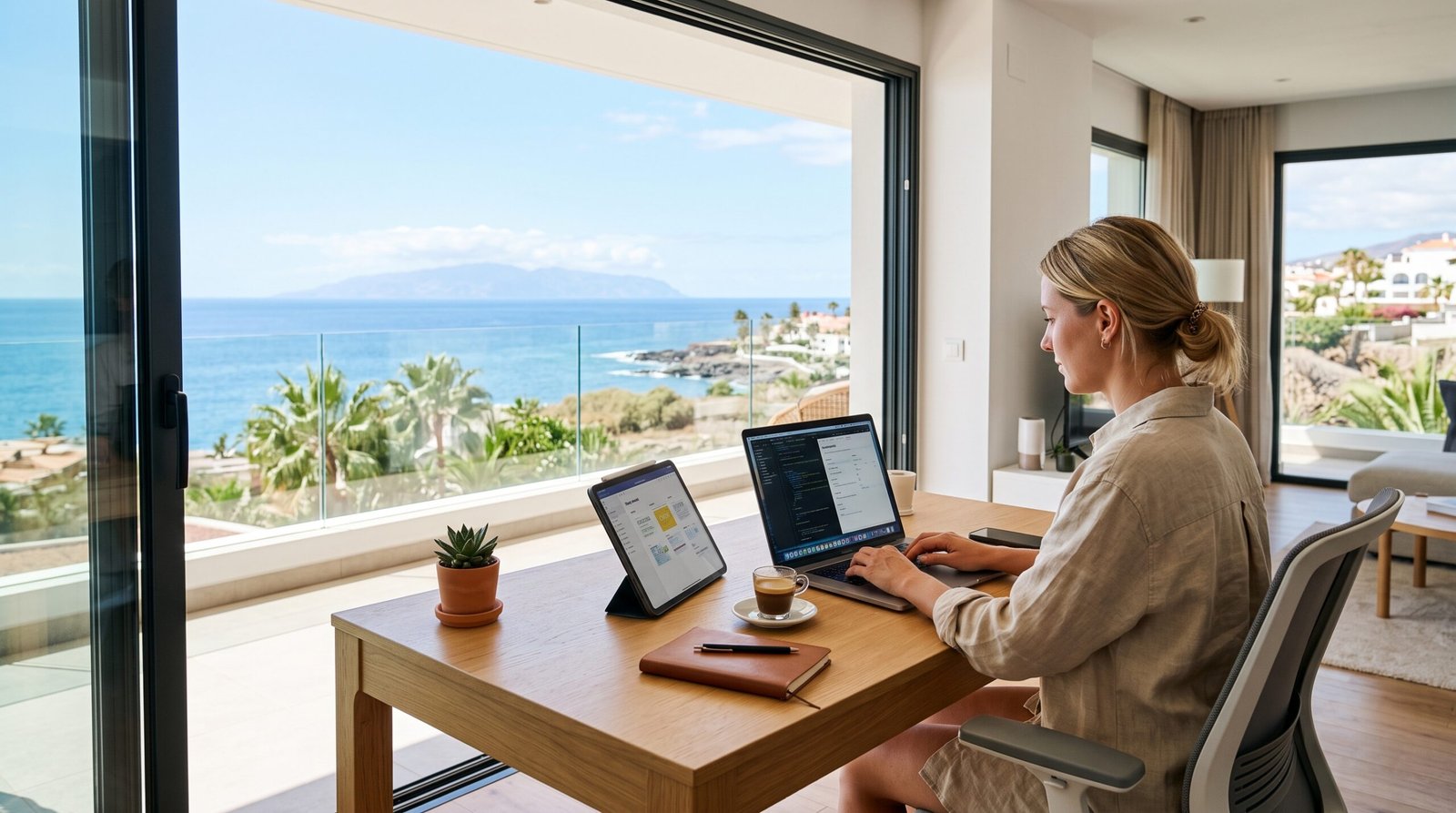
Most furnished apartments in Costa Adeje are designed for short-term holidaymakers, meaning they prioritize dining tables and lounge sofas over dedicated office desks. When vetting properties, assess the workspace potential. Look for properties with secondary bedrooms that can be repurposed, or ample natural light in the living area where a desk can be added. Many remote workers in Adeje supplement their home setup by utilizing local co-working spaces in nearby Fañabé or Las Américas for a few days a week to network and access professional-grade office environments.
By rigorously verifying the broadband capabilities before signing a seasonal lease and understanding your obligations under a contrato de temporada, you guarantee that your winter relocation to Tenerife remains productive, legal, and stress-free.