Winter Microclimates in Adeje: Coastal Sunshine vs. Hillside Nights

The decision to spend the winter in Costa Adeje is usually driven by the promise of year-round sunshine and mild Atlantic temperatures. However, assuming the entire municipality shares the exact same climate is a common oversight among property buyers and long-term tenants.
Tenerife is defined by its microclimates, and even within the relatively compact borders of Costa Adeje, a 10-minute drive uphill significantly alters the daily temperature, atmospheric humidity, and the type of property you should invest in.
Understanding these thermal differences is essential before committing to a six-month winter lease or purchasing a permanent holiday home.
The Coastal Band: El Duque, Fañabé, and La Caleta
Properties situated at or near sea level benefit from the most stable and warmest winter weather on the island. Neighborhoods like El Duque, Fañabé, and La Caleta maintain daytime temperatures hovering comfortably between 21°C and 24°C from December through March.
The oceanic influence keeps the nights incredibly mild in these frontline zones. For winter residents seeking a lifestyle where heavy coats are entirely unnecessary and evening dining happens outdoors year-round, the coastal strip is the premium, albeit more expensive, choice.
The Hillside Zones: Roque del Conde, Adeje Pueblo, and Taucho
As you move inland and gain elevation, the climate shifts noticeably. Elevated residential districts such as Adeje Pueblo, Roque del Conde, and the higher rural areas of Taucho offer panoramic ocean views, larger floor plans, and profound tranquility.
The trade-off for these sweeping vistas is a distinct drop in winter temperatures. While daytime sunshine remains abundant, nighttime temperatures in these hillside zones frequently dip below 14°C during the peak winter months. When combined with oceanic humidity and Atlantic winds, these temperatures feel surprisingly chilly once the sun sets.
The Heating Reality in Southern Tenerife
A crucial factor that catches many expats off guard is the architectural design of Canarian homes. Apartments and villas in the south are built to dissipate heat during the long summers, meaning they feature stone floors, concrete walls, and a complete lack of centralized heating systems.
When evaluating a property for winter use in elevated areas, you must check the climate control infrastructure. Relying purely on natural insulation is often insufficient in Roque del Conde or Taucho. Ensure the property is equipped with modern split air-conditioning units that include an inverter heat pump, or budget for high-quality portable electric radiators.
Terrace Orientation: The Secret to Winter Comfort
For winter property hunters, the compass direction your terrace faces is arguably as important as the interior square meterage.
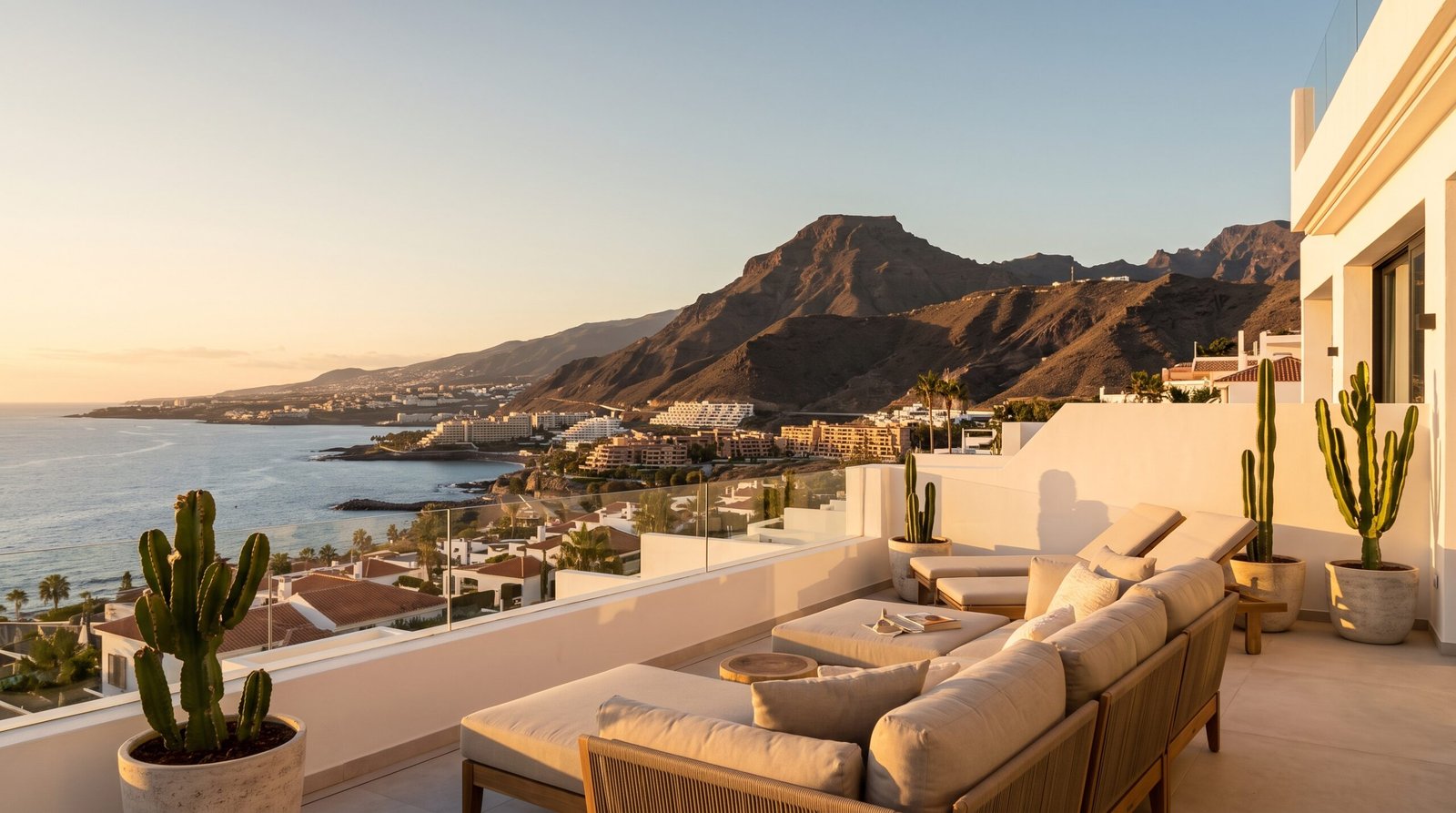
To maximize natural warmth and avoid winter dampness, prioritize properties with a South or South-West orientation. This positioning guarantees direct sunlight throughout the afternoon and until sunset, naturally heating the living spaces and keeping the apartment dry and comfortable. Conversely, North-facing properties—while refreshingly cool in August—can remain in permanent shade from November to March, making them remarkably cold for winter residents.
Taking the time to match a neighborhood’s microclimate with your personal thermal preferences ensures your winter investment in Costa Adeje delivers the exact lifestyle you envision.