Capital Gains Tax (IRNR): The 3% Retention Rule for Non-Resident Sellers in Spain

When you sell a property in Costa Adeje as a non-resident, the Spanish tax authority (Agencia Tributaria) applies a strict preventative measure to ensure you do not leave the country without settling your capital gains tax. This mechanism is known as the 3% Retention Rule.
If your fiscal residency is outside of Spain at the time of the sale, understanding how this withholding works, how to calculate your actual tax liability, and how to claim a refund is essential for your exit strategy.
1. The 3% Withholding Mechanism Explained
By law, the buyer of your property is strictly obligated to withhold exactly 3% of the total agreed purchase price (not the profit) at the notary office.
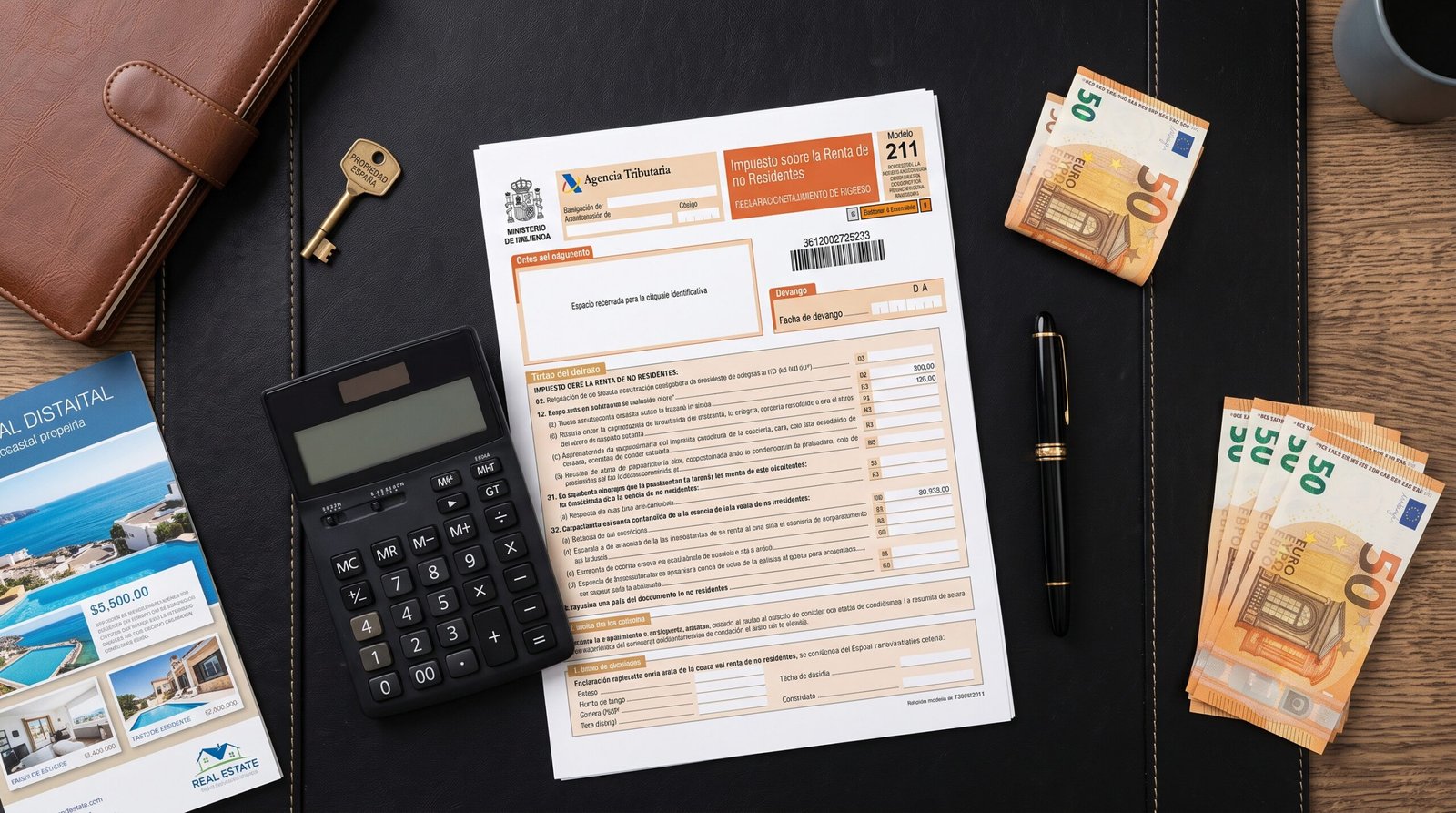
- The Buyer’s Role: The buyer does not pay this 3% to you. Instead, they must submit this amount directly to the Spanish tax office within 30 days of signing the title deed using Modelo 211.
- The Seller’s Receipt: Once the buyer pays the tax office, they must provide you with the official Modelo 211 receipt. You need this document to finalize your own tax declaration.
Example: If you sell your El Duque apartment for €500,000, you will only receive €485,000 at the notary. The remaining €15,000 is transferred directly to the tax authority as an advance payment on your potential capital gains tax.
2. Calculating Your Actual Capital Gain (IRNR)
The 3% retention is not your final tax bill; it is merely an advance deposit. You have exactly 4 months from the date the buyer submits the 3% to file your final capital gains tax return using Modelo 210.
The Spanish Non-Resident Income Tax (IRNR) on property sales is currently set at a flat rate of 19% of your net profit (for both EU and non-EU residents).
How to calculate the net profit:
- Transmission Value (Sale Price): The final sale price minus the expenses inherent to the sale (e.g., agency fees, municipal Plusvalía tax).
- Acquisition Value (Purchase Price): The original purchase price plus the expenses of the original purchase (notary, registry, taxes) plus any structural renovations you made (must be supported by official VAT invoices and licenses).
- The Math: Transmission Value – Acquisition Value = Net Profit.
- The Tax: Net Profit x 19%.
3. Claiming a Refund vs. Paying the Difference
Once your lawyer calculates your actual 19% tax liability, one of two scenarios will unfold:
- Scenario A (You Owe More): If your actual 19% capital gains tax is higher than the 3% already withheld, you must pay the difference to the tax office within the 4-month window.
- Scenario B (You Are Owed a Refund): If you sold the property at a loss, or if your actual tax bill is less than the 3% withheld, you are legally entitled to a refund. Your legal representative will file the claim via Modelo 210.
The Reality of Refunds in Tenerife: The Spanish tax authority is notoriously slow at processing refunds. Expect a waiting period of 6 to 10 months before the excess funds are wired into your bank account. If the tax office takes longer than a year to refund the money, they are legally obligated to add a small delay interest percentage to your payout.
4. Are There Any Exemptions?
Many sellers assume they are exempt from capital gains tax if they are over 65 or if they reinvest the money into a new property. This is a dangerous assumption for non-residents.
- The Over 65 Exemption: This exemption applies only to official fiscal residents of Spain who are selling their primary home (vivienda habitual). As a non-resident selling a holiday home, you do not qualify.
- The Reinvestment Exemption: If you are an EU/EEA resident, you can claim an exemption if you reinvest the proceeds into a new primary residence. However, because you are classified as a non-resident in Spain, the Costa Adeje property cannot legally be your primary residence, making this exemption entirely inapplicable to your sale.