
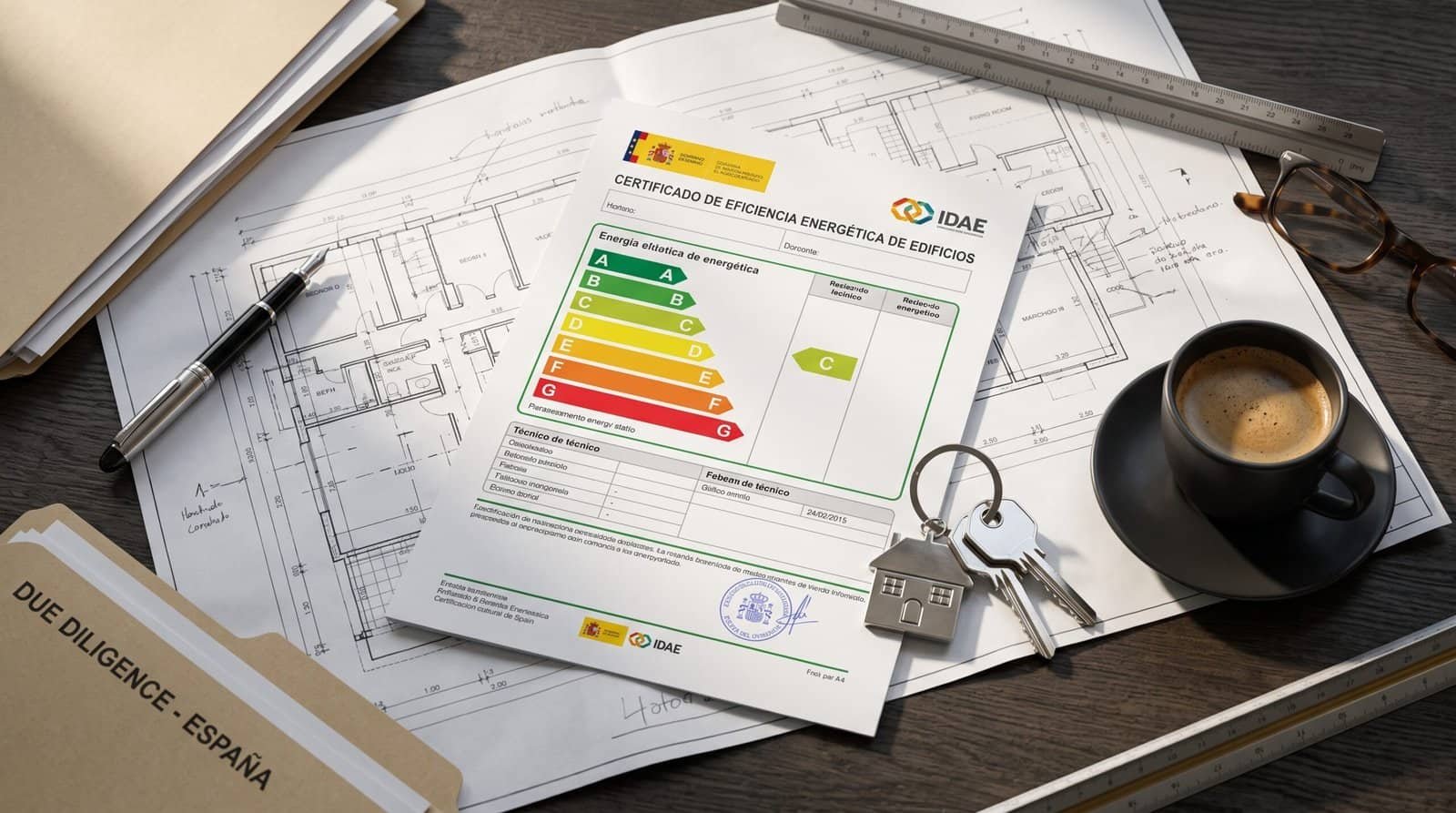
The CEE (Energy Performance Certificate): The Mandatory Document Blocking Tenerife Sales

When orchestrating a high-value property transaction in Costa Adeje, international buyers and sellers naturally focus on the title deed, mortgages, and tax retentions. However, a seemingly minor administrative document frequently stalls completions at the Notary table: the Certificado de Eficiencia Energética (CEE), or Energy Performance Certificate.
Mandated by European Union directives and strictly enforced under Spanish Royal Decree 390/2021, the CEE is no longer a bureaucratic suggestion. It is a strict legal requirement for selling, renting, or advertising any property in the Canary Islands.
Here is the technical breakdown of the CEE, why the Notary demands it, and how missing it impacts your real estate timeline.
1. What is the CEE?
The Energy Performance Certificate is an official technical report that evaluates a property’s energy consumption and carbon dioxide emissions.
- The Rating System: Much like household appliances, the property is assigned a color-coded rating ranging from A (highly efficient, green) to G (highly inefficient, red).
- Validity: Once issued and properly registered, the certificate is legally valid for exactly 10 years (unless the property receives a “G” rating, which under new regulations must be renewed every 5 years).
- The Exemption Myth: Very few properties are exempt. Unless you are buying an isolated building of less than 50 square meters or a designated historical monument, the CEE is mandatory.
2. The Advertising Mandate and Fines
The legal requirement for the CEE begins long before you reach the Notary. It is mandatory from the exact moment a property hits the market.
- Public Display: Spanish law requires the energy rating (the specific letter) to be visibly displayed in all promotional materials. This includes physical real estate agency windows, online portals (Idealista, Fotocasa), and private listings.
- The Penalties: Regional government inspectors actively monitor real estate portals. Advertising a property without the CEE rating can trigger immediate administrative fines ranging from €300 to over €6,000 for severe infractions, levied against both the owner and the listing agency.
3. The Notary Blockade on Completion Day
For buyers, the ultimate enforcement of the CEE occurs during the legal transfer of the asset.
- The Legal Transfer: The seller is legally obligated to hand over the original, registered CEE document to the buyer at completion.
- The Notary’s Refusal: Spanish Notaries are instructed by law to verify the existence of this certificate. If the seller arrives at the signing without a valid, registered CEE, the Notary will simply refuse to authorize and sign the Escritura (Title Deed). This can paralyze a transaction, causing chain-collapses for buyers relying on strict mortgage drawdown timelines.
4. The Vivienda Vacacional (VV) Requirement
If your investment strategy in Costa Adeje involves holiday lettings, the CEE is a foundational prerequisite.
- The Canary Islands Ministry of Tourism requires a valid CEE to be submitted alongside your Declaración Responsable when applying for a Vivienda Vacacional (VV) license. Failing to possess one renders your property legally ineligible for the short-term rental market.
Ensuring a seamless property acquisition in Tenerife requires preemptive administrative audits; your legal representative must verify that the seller has a valid, officially registered CEE weeks before completion day to prevent costly delays and guarantee immediate compliance for your future rental yields.