
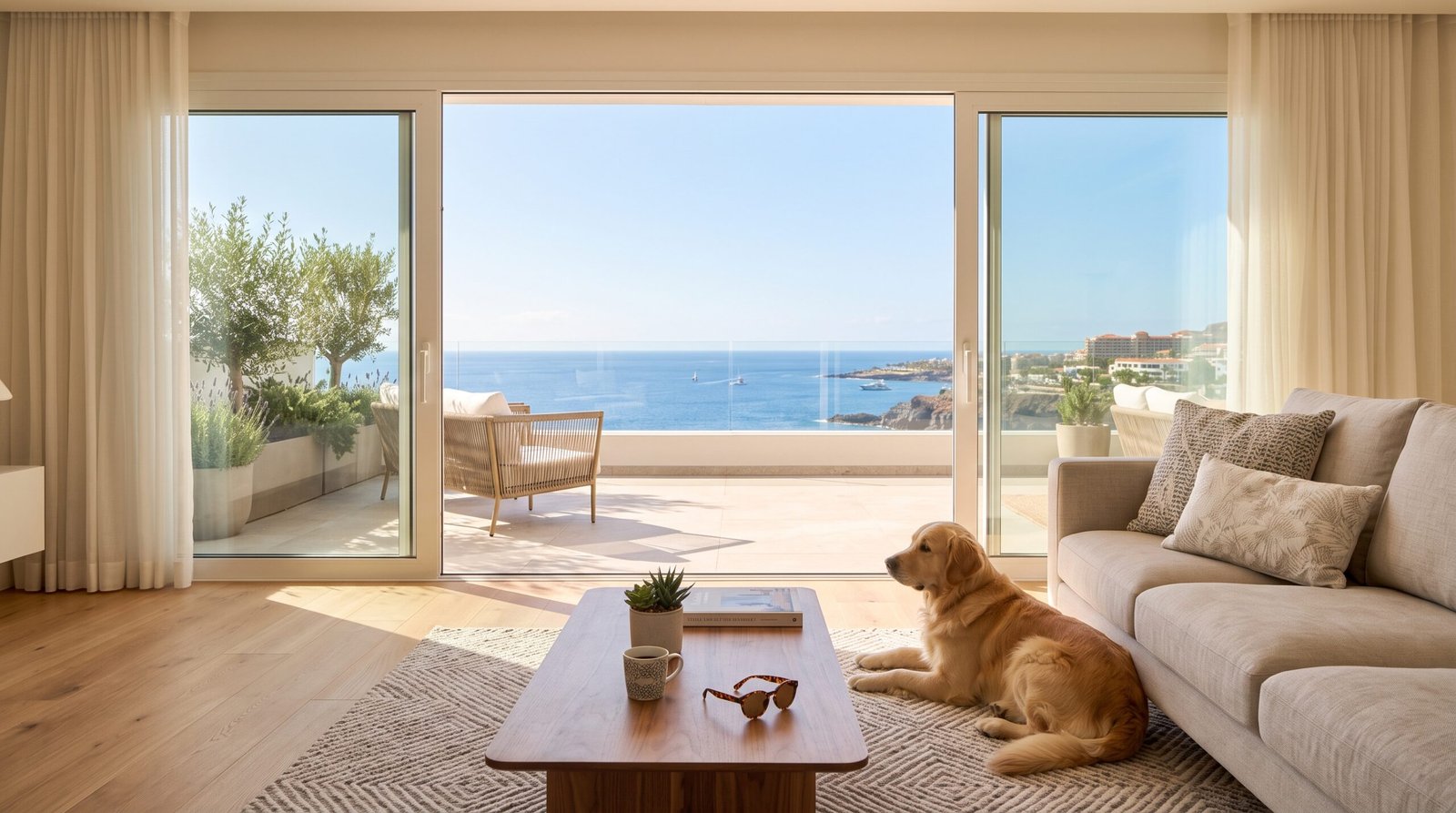
Finding Pet-Friendly Winter Rentals in Adeje: LAU Rules & Deposits

Relocating to Costa Adeje for the winter months offers an exceptional lifestyle upgrade, but bringing a dog or cat across borders introduces a significant layer of complexity to your property search.
In the highly competitive South Tenerife rental market, where prime apartments are leased within hours, pet owners frequently encounter hesitation from landlords. Understanding exactly how Spanish rental law views pets, what financial guarantees a landlord can legally request, and how to present your application can make the difference between repeated rejections and securing the perfect winter home.
1. What the Spanish LAU Says About Pets
The Spanish Urban Leases Act (Ley de Arrendamientos Urbanos, or LAU) is the definitive legal framework for residential rentals.
Crucially, the LAU does not explicitly ban or permit pets by default. Instead, it defers to the freedom of contract between the two parties.
- The Default Rule: If the rental contract is completely silent regarding animals, the tenant is technically and legally allowed to keep pets in the property.
- The Prohibition Clause: A landlord has the absolute legal right to prohibit animals, provided this ban is explicitly written into the lease agreement. In Costa Adeje, nearly all standard agency and private contracts include a “no pets” (no se admiten mascotas) clause by default to protect the property’s furnishings.
To overcome this, you must negotiate the removal or modification of this clause before signing. Attempting to hide a pet is considered a breach of contract and constitutes legal grounds for immediate eviction.
2. The Community of Owners (Estatutos de la Comunidad)
Sometimes, a landlord may be perfectly willing to accept your dog, but their hands are tied by the building’s internal regulations.
Most apartments and townhouses in Costa Adeje—particularly in high-end zones like El Duque, La Caleta, or Madroñal—are part of a Comunidad de Propietarios (Community of Owners). Under the Spanish Horizontal Property Law, a community can establish internal statutes (Estatutos) that restrict or entirely ban pets from common areas, such as swimming pools, shared gardens, or elevators.
Before signing a lease, ensure your real estate agent or landlord confirms that the building’s specific community rules allow your pet to reside and transit through the complex.
3. Negotiating Deposits and Additional Guarantees
The primary reason landlords reject pets is the fear of property damage. To mitigate this risk, they will often ask for higher security deposits. It is vital to know your legal boundaries:
- For Long-Term Leases (Vivienda Habitual): The statutory deposit (fianza) is strictly capped at one month’s rent. A landlord can legally ask for an additional guarantee (garantía adicional) to cover potential pet damage, but this additional amount cannot exceed two months’ rent. Therefore, the absolute legal maximum a landlord can hold upfront is three months’ rent.
- For Seasonal Winter Leases (Contrato de Temporada): The legal fianza required for a temporary, non-permanent stay is two months’ rent. Because seasonal contracts are slightly more flexible under the LAU, landlords have more leeway in requesting extra guarantees.
4. The New Spanish Animal Welfare Law (2023)
If you are bringing a dog to Tenerife, you must comply with Spain’s recent Ley de Bienestar Animal (Animal Welfare Law). The law now mandates that all dog owners—regardless of the breed’s size or classification—must hold a civil liability insurance policy (Seguro de Responsabilidad Civil) covering potential damages to third parties.
Presenting a copy of this active insurance policy to a prospective landlord in Costa Adeje acts as a powerful negotiating tool, demonstrating that you are a responsible, legally compliant owner whose pet poses zero financial risk to their property.
5. How to Secure a Pet-Friendly Lease
In a landlord’s market, passive searching is rarely effective for pet owners. To secure a high-quality property in Costa Adeje, you must proactively lower the landlord’s perceived risk:
- Create a Pet CV: Include a photo of your pet, details of their breed and age, proof of vaccinations, and references from previous landlords confirming they caused no damage or noise complaints.
- Offer Professional Cleaning: Propose a clause in the contract stating that you will pay for a professional deep clean (including upholstery and carpets) upon the termination of your lease.
- Target Unfurnished Properties: While most winter rentals are fully furnished, seeking out partially furnished or unfurnished properties significantly increases your chances of acceptance, as the landlord’s financial exposure to damaged inventory is vastly reduced.
Preparation and transparency are your greatest assets. By understanding the legal boundaries of deposits and arriving with the correct documentation, wintering in Costa Adeje with your pet becomes a manageable and highly rewarding transition.