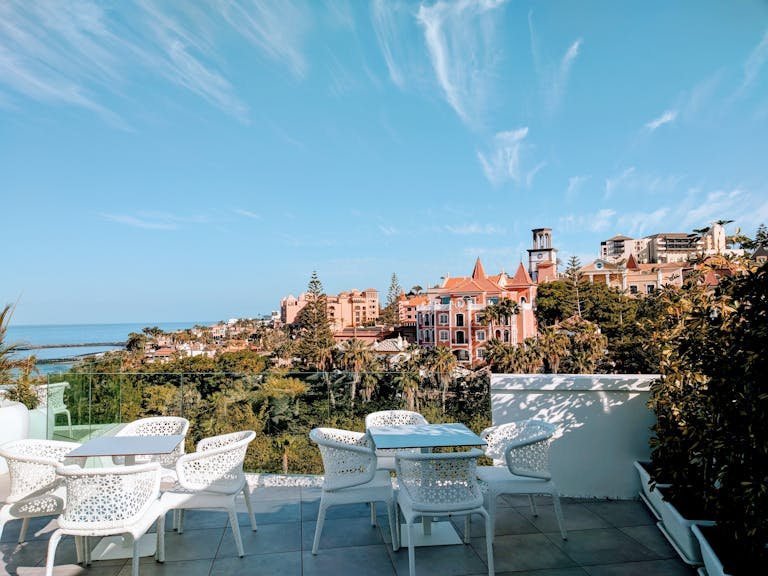

Tenerife Property Fees—The Quick Guide

Selling a property in Tenerife is a bit like trying to find parking in Costa Adeje in August: entirely possible, but definitely easier if you let a professional handle it.
And that’s exactly what real estate agencies are for—though, of course, they don’t work for free.
If you’re planning to sell an apartment, villa or bungalow in the Canary Islands in 2025, here’s the clear, friendly and slightly cheeky guide you need.
What Is a Real Estate Commission (in Tenerife)?
A real estate commission is the fee an agency charges for handling the sale of your property.
Here in the Canaries—with a huge international market and buyers from 40+ countries—agents often work harder than usual. Expect:
- multilingual viewings,
- coordinating buyers flying in for “a quick visit”,
- managing paperwork in Spanish + English (sometimes German),
- and keeping a straight face when someone asks if the apartment comes with a guarantee of “eternal summer”.
The commission should always be clearly stated in the contract (encargo de venta).
What Does the Law Say in the Canary Islands?
The same rules apply as in the rest of Spain:
- No national law says who must pay the commission when selling.
- The usual practice in Tenerife: the seller pays.
- For rentals: the 2023 Housing Law says the landlord pays agency fees.
The only difference?
In the islands, agencies tend to offer more international services, which affects the final price.
How Much Do Agencies Charge in Tenerife (2025)?
Here’s the realistic range for the Canary Islands—based on the actual market:
Standard properties (apartments, townhouses, rural homes)
➡️ 5% is the most common fee.
➡️ Range: 3% – 6% depending on services.
Luxury properties (villas in Costa Adeje, golf resorts, ocean-view penthouses)
➡️ 6% – 10%
These include properties in zones like El Duque, Caldera del Rey, Roque del Conde, or Palm Mar.
Why the higher end in the south?
Because buyers often live abroad and agencies must work harder to:
- manage long-distance negotiations
- organise virtual tours
- coordinate notary appointments with limited travel dates
- handle power-of-attorney sales
- ensure documentation is correct for foreign buyers
It’s a more complex job than a standard sale on the peninsula, and prices reflect that.
What Services Do Canary Agencies Actually Provide?
Here’s what good agencies in Tenerife should offer (and many do):
Home Preparation
- Professional photography (because sunlight is strong and shadows are tricky)
- Video tours
- Drone footage for villas
- Optional home staging
Management of Viewings
With buyers who:
- arrive 20 minutes early (locals),
- arrive exactly on time (Germans),
- arrive 45 minutes late because “traffic in Playa de las Américas is crazy today” (everyone else).
Legal & Administrative Support
Extremely important in the islands, because most buyers are foreigners:
- Obtaining the nota simple
- Getting the energy certificate
- Checking tourist licence status (vivienda vacacional)
- Preparing the arras contract
- Reviewing debts with the community
- Ensuring the property is legal (especially rural homes and older apartments)
Assistance for foreign buyers
Often includes:
- NIE guidance
- Help with opening a Spanish bank account
- Power-of-attorney advice
- Notary coordination
This is why commissions in Tenerife tend to be slightly higher than the Spanish mainland.
Who Pays the Commission in Tenerife?
In 95% of sales:
➡️ The seller pays.
Some agencies advertise “No commission for the seller!”
Lovely—but usually this means:
➡️ The buyer pays, or
➡️ The property is overpriced to compensate.
Everything is legal as long as:
- it’s written in the contract,
- and both sides agree.
Is It Legal for the Buyer to Pay the Commission?
Absolutely.
This usually happens when:
- the buyer hires a “property finder”
- the agency specialises in international clients
- the deal is structured to make the listing more attractive
But again: contract, contract, contract.
When Is the Commission Paid?
Typically:
➡️ At the notary, on the day of signing the deeds (escritura).
But many agencies in the Canaries split payments:
- Part at the arras deposit
- Part at completion
This is normal and helps both sides manage the process.
Why Are Fees in Tenerife Often Higher Than Mainland Spain?
Very simple:
- 60–80% of buyers are foreigners
- Properties in coastal areas have higher demand
- Agencies offer multilingual support
- The market is hot all year round
- Buyers visit on holiday → short decision windows
- Many properties require extra checks (tourist licence, community rules, energy compliance)
In short:
Selling in Tenerife = more work, more coordination, more expertise.
Final Thoughts
Real estate commissions in Tenerife aren’t random—they reflect the unique, international nature of the market.
A good agency will guide you through the entire process, prevent expensive mistakes, and make sure your sale goes smoothly.
Just ensure the services match the price, everything is in writing, and you feel supported from the first viewing to the notary’s final stamp.
Disclaimer
This article is for informational purposes only and is based on general real estate practices in Spain and the Canary Islands. It should not be considered legal advice or a substitute for professional guidance. For property transactions, contracts or legal matters, we strongly recommend consulting a licensed lawyer, gestor or qualified real estate professional in Tenerife.