
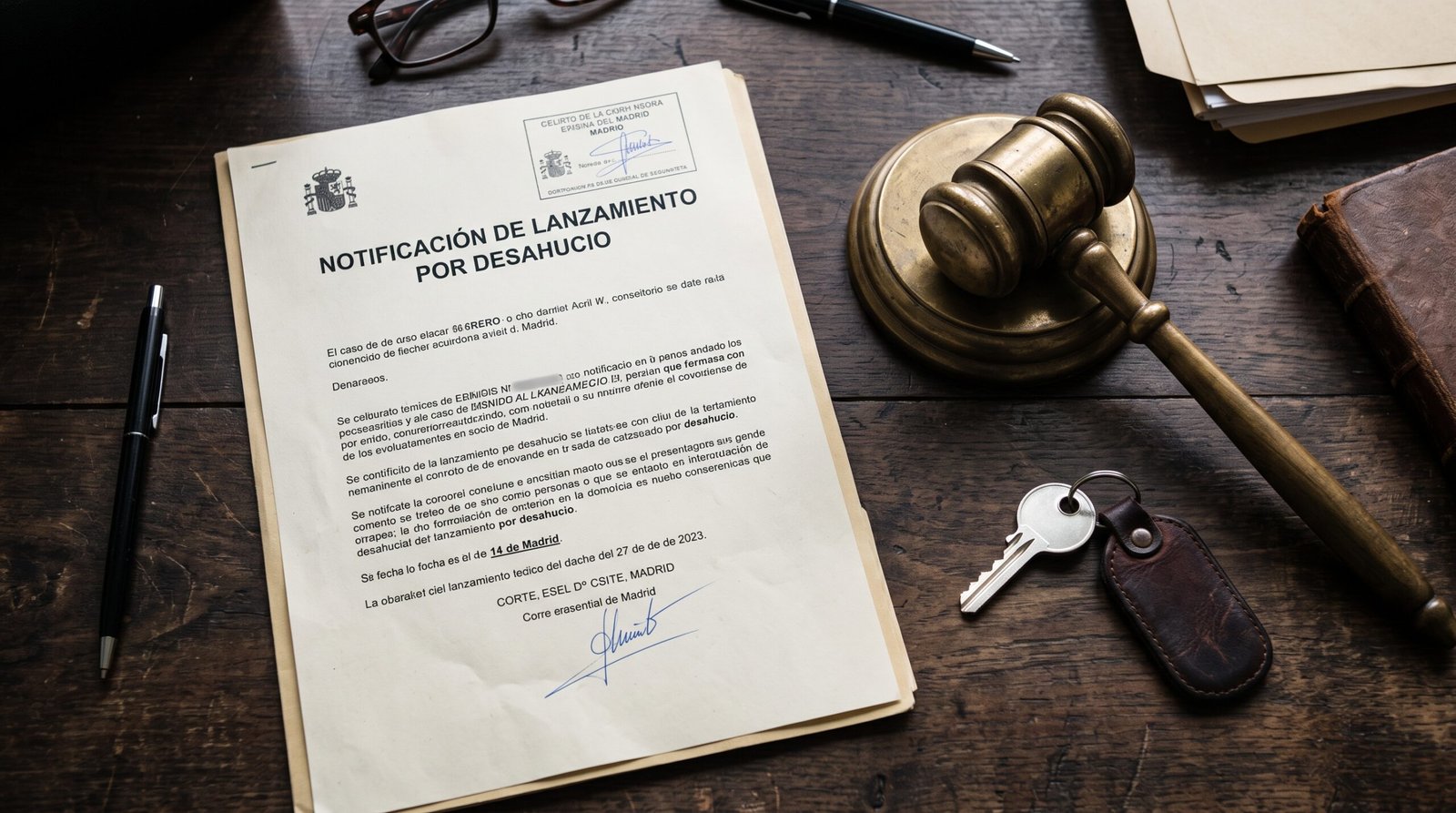
The “Desahucio Express” Reality: Eviction Timelines in Tenerife Courts (2026)

When foreign landlords invest in the Costa Adeje long-term rental market, they frequently rely on the existence of Spain’s so-called “Desahucio Express” (Express Eviction) law to mitigate the risk of defaulting tenants. In theory, this legal framework was designed to allow property owners to reclaim their assets rapidly. In practice, relying on this mechanism in the Canary Islands without secondary protection is a critical financial vulnerability.
The reality of the Tenerife judicial system, compounded by recent national housing legislation, means that evicting a non-paying tenant (inquiokupa or defaulting renter) is an arduous, highly bureaucratic process. Here is the unvarnished reality of the eviction timeline and legal landscape in 2026.
1. The Myth of the 30-Day Eviction
The term “Desahucio Express” suggests a swift resolution, but it is fundamentally misleading. The law theoretically allows a judge to order an eviction within weeks if the tenant fails to respond to the initial lawsuit.
However, the legal deadlines are entirely disconnected from the operational capacity of the local courts in the south of Tenerife (primarily the Juzgados de Arona or Granadilla de Abona, which process Adeje cases). These courts are chronically backlogged.
- Actual Timelines: In 2026, an uncontested eviction for non-payment of rent typically takes between 7 to 10 months from the moment the lawsuit is filed. If the tenant opposes the eviction and requests free legal aid (justicia gratuita), the timeline can easily stretch to 12 to 16 months.
- The Freeze Period: During this entire period, the landlord cannot legally change the locks, cut off utility supplies (water or electricity), or enter the property. Doing so constitutes a criminal offense (coercion or illegal entry) under the Spanish Penal Code, which the tenant can use to completely derail the eviction process.
2. The Vulnerability Check (Social Services Bottleneck)
The most significant delay in the modern Spanish eviction process stems from the integration of social welfare checks. Following the aggressive housing laws implemented in recent years, courts are legally mandated to pause eviction proceedings to assess the tenant’s economic and social vulnerability.
- The Mandate: Before a judge will authorize the final date of eviction (lanzamiento), the local Social Services department (Servicios Sociales of the Adeje Town Hall) must issue a binding report.
- The Delay: If Social Services determines the tenant is “vulnerable” (e.g., minors in the home, low income, unemployment), the court can suspend the eviction for an additional 1 to 3 months to allow the state to find alternative housing.
- Large Holder Burden (Gran Tenedor): If you own 5 or more residential properties, you are classified as a “Large Holder.” You face even stricter prerequisites, including mandatory arbitration and conciliation attempts before you are even legally allowed to file the eviction lawsuit.
3. The Legal Anatomy of a Tenerife Eviction
A successful eviction requires absolute procedural precision. You cannot simply walk into a police station; it is a purely civil matter that requires dual legal representation.
- The Burofax: Before filing a lawsuit, your lawyer must send a certified legal notice (Burofax) to the tenant, demanding payment within a strict timeframe (usually 10 to 30 days). This proves out-of-court exhaustion.
- Abogado and Procurador: You must hire both a lawyer (Abogado) to draft the lawsuit and a court representative (Procurador) to present it physically/digitally to the local court and handle notifications.
- The Admission (Admisión a Trámite): It can take the court 2 to 4 months just to officially admit the lawsuit and notify the tenant.
- The Lanzamiento: This is the physical eviction day. If the tenant refuses to leave, court officials, a locksmith (cerrajero), and the Guardia Civil or local police will physically force entry and return possession to you.
4. The Financial Bleed and Strategic Mitigation
The cost of an eviction extends far beyond the lost rental income. Landlords must budget approximately €1,500 to €2,500 in legal fees (Abogado, Procurador, locksmith, and potential powers of attorney). Furthermore, properties are frequently returned in a state of disrepair, requiring thousands of euros in cosmetic or structural rehabilitation before they can be re-listed.
The Absolute Imperative: Professional landlords in Costa Adeje no longer rely on the court system as their primary defense. Signing a long-term rental contract (LAU) without an active Rent Default Insurance (Seguro de Impago de Alquiler) is considered financial negligence. These insurance policies not only cover 12 months of lost rent while the eviction drags on, but they also pay all associated legal fees and expertly navigate the court bureaucracy on your behalf.
Navigating the Spanish court system for a breach of contract is a lengthy and highly bureaucratic process; securing airtight tenant vetting and comprehensive rent default insurance before handing over the keys is the most effective method to protect your rental yield in Costa Adeje.