The Nota Simple: Decoding Spain’s Most Critical Real Estate Document

When acquiring luxury real estate in Costa Adeje, international buyers are often handed a stack of Spanish paperwork during the initial viewing or negotiation phase. Among these, one specific document dictates the absolute legal and financial reality of the property: the Nota Simple Informativa.
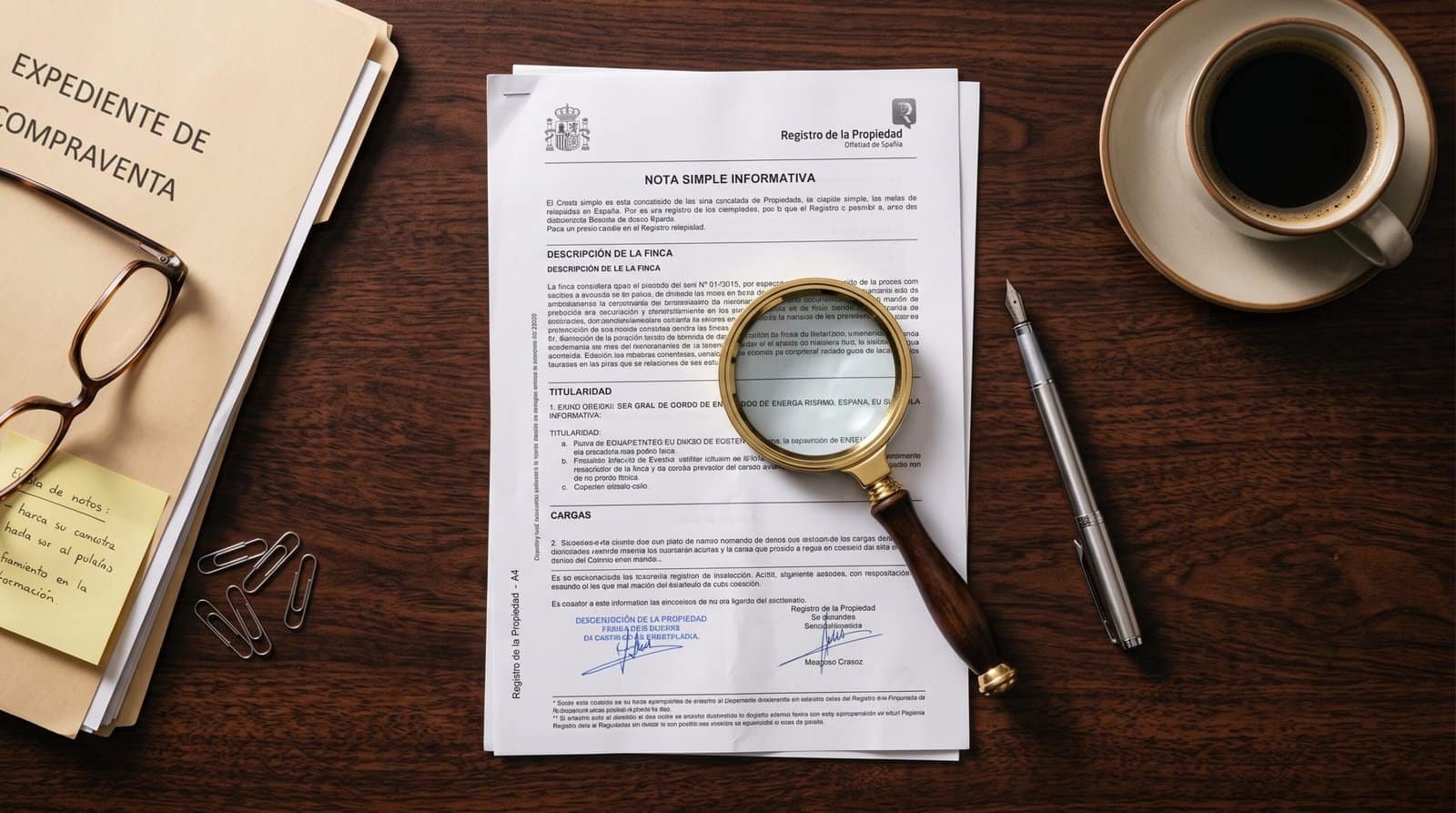
Issued by the Spanish Land Registry (Registro de la Propiedad), the Nota Simple is the ultimate X-ray of an asset. It reveals who actually owns the villa, its registered boundaries, and crucially, what debts are attached to it. Attempting to sign a reservation contract (Contrato de Arras) without a freshly extracted, professionally translated Nota Simple is fiscal suicide.
Here is the analytical breakdown of how to read a Nota Simple and the red flags your legal team must identify.
1. Verification of True Ownership (Titularidad)
A common scam or point of friction in Tenerife real estate involves individuals attempting to sell a property they do not have the full legal right to transfer.
- The Registered Owner: The Nota Simple clearly states the names and identity numbers (DNI/NIE) of the legal owners, alongside their ownership percentages.
- Usufruct Rights (Usufructo): It reveals if a third party holds a “life interest” to live in the property, even if they don’t own it. You cannot evict a usufructuary.
- Inheritance Blocks: If the previous owner passed away, the heirs cannot legally sell the property until the inheritance tax is paid and the title is officially transferred into their names at the Registry. The Nota Simple immediately highlights if this administrative process is pending.
2. The Financial Encumbrances (Cargas y Gravámenes)
In Spain, debts are attached to the property, not just the person. If you buy a villa with outstanding debts, you inherit the financial liability. The Cargas section of the Nota Simple is the most critical paragraph in your due diligence.
- Active Mortgages (Hipotecas): It details any outstanding bank loans secured against the property, including the total capital, the lending bank, and the maximum execution value. Your lawyer must mandate the seller to cancel this mortgage at the Notary on completion day.
- Embargoes (Embargos): These are legal freezing orders placed on the asset due to unpaid debts. This could be an embargo from the Spanish Tax Agency (Hacienda) for unpaid taxes, Social Security, or a private creditor via a court order.
- Tax Limitations (Afecciones Fiscales): Standard warning clauses indicating that the property is subject to potential tax reviews by Hacienda for recent transfers. These automatically clear after a statutory period, but your legal team must verify they are not active liabilities.
3. Physical Description vs. Reality (Descripción de la Finca)
The Nota Simple provides the official legal description of the property, including its square meterage, boundaries, and internal layout (e.g., number of bedrooms, presence of a pool).
- The Discrepancy Trap: As explored in previous Catastro vs. Registry analyses, if the Nota Simple states the property has 150 square meters, but the physical villa you are touring has 300 square meters, the extension is legally non-existent. This will instantly block bank financing and expose you to municipal demolition orders unless regularized via a Declaración de Obra Nueva.
4. The 48-Hour Extraction Rule
A Nota Simple is merely a snapshot in time. A document extracted six months ago is entirely useless for due diligence today.
- The Expiration Risk: A seller could extract a clean Nota Simple on Monday, and take out a secondary loan against the property on Wednesday.
- The Final Check: Your legal representative must request an updated, real-time Nota Simple directly from the Registry a maximum of 24 to 48 hours before you sign the final deeds at the Notary to guarantee no last-minute embargoes have been filed.
Engaging a highly qualified local lawyer to extract, translate, and cross-reference the Nota Simple against the physical reality of the property and municipal records is the only method to guarantee you are purchasing a clean, unencumbered asset in Costa Adeje.